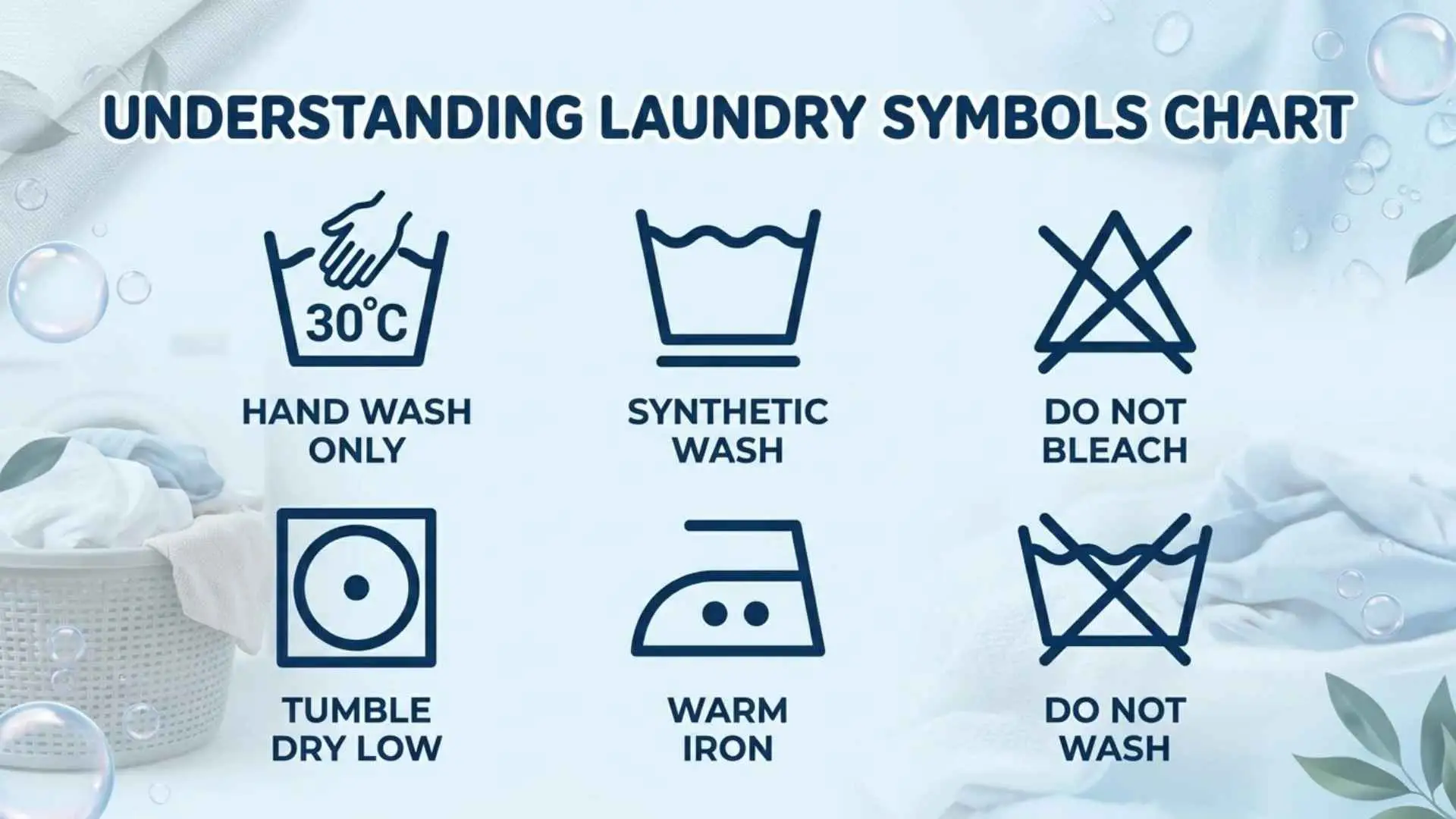
Laundry labels contain a simple visual language that helps protect clothing from damage. A washing symbols chart explains what each care symbol means, including washing, drying, bleaching, ironing, and professional cleaning instructions. These symbols appear on clothing tags around the world and guide you on how to clean fabrics safely while extending the life of your clothes.
Many people ignore clothing labels because the icons look confusing, but understanding them can prevent common mistakes like shrinking sweaters, fading colors, damaging delicate fabrics, or ruining expensive garments. Once you learn the basic shapes and patterns, reading laundry symbols becomes quick and easy.
Quick Meaning of Washing Symbols Chart
A washing symbols chart is a visual guide that explains the care instructions found on clothing labels. The symbols show how garments should be washed, dried, ironed, bleached, or professionally cleaned. These internationally recognized icons help consumers maintain fabric quality and avoid accidental damage during laundry care.
Washing Symbols Chart Overview
| Symbol Name | Primary Meaning | Category | Origin | Common Usage | Modern Meaning |
| Wash Tub Symbol | Washing instructions | Laundry Care | International textile standards | Clothing labels | How to clean fabric |
| Hand Wash Symbol | Gentle hand cleaning required | Washing | Textile care systems | Delicate clothing | Avoid machine washing |
| Triangle Symbol | Bleaching instructions | Bleaching | International care labeling | Fabric treatment | Whether bleach is safe |
| Square Symbol | Drying instructions | Drying | Global garment labeling | Laundry tags | How to dry clothing |
| Iron Symbol | Ironing instructions | Heat Care | Clothing care standards | Shirts and fabrics | Safe ironing temperature |
| Circle Symbol | Professional cleaning | Dry Cleaning | Textile industry standards | Special fabrics | Professional care guidance |
| Dots Inside Symbols | Temperature level | Care Measurement | International system | Washers and irons | Heat limits |
What Do Washing Symbols Mean?
Washing symbols are small icons printed on garment labels that provide instructions for cleaning and maintaining clothing. They communicate important information about water temperature, washing methods, drying techniques, and heat limitations.
The main washing symbol is a wash tub icon, which looks like a small basin filled with water. This symbol tells you whether the item can be machine washed, hand washed, or should not be washed with water.
The symbols are designed to be understood across languages because clothing is manufactured and sold globally. Instead of writing instructions in multiple languages, manufacturers use universal icons.
Understanding these symbols helps you answer important questions:
- Can this item go into the washing machine?
- What water temperature should I use?
- Can I use bleach?
- Should I air dry or tumble dry?
- Is ironing safe?
- Does it require professional cleaning?
History and Origin of Washing Symbols
The development of washing symbols began as clothing production became more international. Manufacturers needed a simple way to communicate garment care instructions to customers in different countries.
Before standardized symbols existed, clothing labels often contained written instructions. However, language differences created confusion, especially when garments were exported worldwide.
In the 20th century, textile organizations began developing universal care labeling systems. The International Organization for Standardization (ISO) and other textile groups helped create symbols that could be recognized internationally.
The symbols used today are closely connected to the GINETEX care labeling system, which originated in Europe during the 1960s. This system introduced recognizable shapes such as:
- A tub for washing
- A triangle for bleaching
- A square for drying
- An iron for ironing
- A circle for professional cleaning
Over time, these symbols became widely adopted by clothing manufacturers, fashion brands, and textile industries around the world.
Symbolism and Interpretation of Washing Symbols
Washing symbols are practical symbols rather than cultural or spiritual symbols. Their meaning comes from function, design, and universal communication.
Each shape represents a different stage of clothing care.
The Wash Tub Symbol
The wash tub represents water-based cleaning. It tells users how a garment should be washed.
Common variations include:
- Plain tub: Normal machine washing is allowed.
- Tub with one line underneath: Use a gentle cycle.
- Tub with two lines underneath: Use a delicate cycle.
- Tub with a hand: Wash by hand only.
- Crossed-out tub: Do not wash with water.
Temperature Dots
Dots inside washing symbols indicate maximum temperatures.
Common meanings:
- One dot: Cold wash
- Two dots: Warm wash
- Three dots: Hot wash
Higher temperatures provide stronger cleaning but may damage sensitive fabrics.
The Triangle Symbol
The triangle represents bleach care.
Variations include:
- Empty triangle: Any bleach may be used.
- Triangle with lines: Only non-chlorine bleach is allowed.
- Crossed triangle: Do not bleach.
The Square Symbol
The square represents drying methods.
It may include:
- Circle inside square: Tumble drying allowed.
- Dots inside circle: Heat level.
- Lines inside square: Air drying methods.
The Iron Symbol
The iron symbol explains whether heat can be applied.
Dots show temperature levels:
- One dot: Low heat
- Two dots: Medium heat
- Three dots: High heat
A crossed-out iron means ironing is not recommended.
Cultural Significance of Laundry Care Symbols
Laundry symbols are mostly practical symbols, but their importance varies across cultures because clothing care traditions differ.
Western Countries
In countries such as the United States, Canada, and many European nations, care symbols are commonly found on nearly all manufactured clothing. Consumers often rely on these labels for washing machine settings and fabric protection.
Asian Countries
In countries with large textile industries, including Japan, China, and South Korea, standardized care symbols are widely used because clothing production and international trade are major industries.
Global Fashion Industry
Luxury fashion brands use care symbols to protect expensive materials such as:
- Silk
- Cashmere
- Wool
- Leather
- Embroidered fabrics
The symbols help preserve craftsmanship and maintain garment value.
Religious or Spiritual Meaning of Washing Symbols

Washing symbols do not have religious or spiritual meanings. They are technical communication tools created for garment care.
However, washing and cleanliness have symbolic importance in many religions and cultures. Concepts of purity, preparation, and cleanliness appear in various traditions, but these ideas are separate from modern laundry symbols.
The clothing care symbols themselves should be understood as practical instructions rather than spiritual signs.
Scientific or Technical Meaning of Washing Symbols
Washing symbols have technical importance because they communicate information about fabric science and material limitations.
Different fabrics respond differently to:
- Heat
- Water
- Detergents
- Mechanical movement
- Chemicals
For example:
- Wool fibers can shrink when exposed to high temperatures.
- Silk can weaken with harsh chemicals.
- Synthetic fabrics may melt under excessive heat.
- Elastic fibers can lose their shape with improper washing.
Care symbols translate these scientific properties into simple visual instructions.
Where Washing Symbols Are Used
Washing symbols appear in many places related to textiles and clothing.
Clothing Labels
The most common location is the care tag sewn inside:
- Shirts
- Pants
- Dresses
- Jackets
- Sweaters
Bedding and Household Fabrics
Symbols also appear on:
- Towels
- Blankets
- Curtains
- Pillow covers
- Table linens
Fashion Industry
Designers and manufacturers use these symbols to communicate proper care methods to customers.
Online Shopping
Many clothing websites include care symbol information in product descriptions to help buyers understand maintenance requirements before purchasing.
Laundry Appliances
Modern washing machines and dryers sometimes display similar icons to represent cycles and settings.
Common Variations of Washing Symbols
Although international symbols are similar, some variations exist depending on region and manufacturer.
US Care Labels
United States labels often combine symbols with written instructions. They may include phrases such as:
- Machine wash cold
- Tumble dry low
- Do not bleach
European Care Labels
European labels often rely more heavily on standardized symbols.
Japanese Care Labels
Japanese labels commonly use internationally recognized symbols but may include additional fabric information.
Modern Digital Adaptations
Some brands now use:
- QR codes on labels
- Digital care guides
- Smartphone apps
These provide more detailed instructions beyond traditional symbols.
Common Misconceptions About Washing Symbols
Myth 1: More Water Means Cleaner Clothes
A higher water temperature or stronger wash cycle does not always mean better cleaning. Some fabrics require gentle treatment to maintain quality.
Myth 2: A Crossed Symbol Means the Item Is Impossible to Clean
A crossed symbol usually means a specific method should be avoided. Another cleaning method may still be suitable.
Myth 3: All Clothes Need the Same Washing Method
Different fabrics have different needs. Cotton, wool, silk, and synthetic materials react differently to washing conditions.
Myth 4: Care Labels Are Only Suggestions
Care labels are designed based on fabric testing. Ignoring them can shorten garment life.
Interesting Facts About Washing Symbols
- Washing symbols are internationally recognized.
Their main purpose is to overcome language barriers in the global clothing market. - The symbols are based on simple shapes.
Designers chose familiar objects like tubs and irons because they are easy to understand visually. - Dots represent heat levels.
The dot system allows users to understand temperature limits without reading numbers. - Not every symbol appears on every label.
Manufacturers include only the care instructions relevant to each garment. - Care symbols protect expensive clothing.
Luxury fabrics often require special handling, making these symbols especially important. - Laundry symbols reduce textile waste.
Proper care helps clothes last longer, reducing unnecessary replacement. - The system supports international trade.
Manufacturers can sell clothing globally using a shared visual language. - Symbols continue evolving.
Modern technology is adding digital information options alongside traditional labels. - The symbols are not decoration.
Each icon communicates a specific technical instruction. - Care symbols connect design with science.
They translate fabric chemistry and manufacturing knowledge into simple images.
Related Symbols
Recycling Symbols
Recycling symbols communicate how materials should be reused or processed. Unlike washing symbols, they focus on environmental handling.
Hazard Symbols
Chemical hazard symbols warn about dangerous substances. They are designed for safety rather than clothing maintenance.
Road Signs
Road symbols also use universal visual communication to help people understand information quickly.
Appliance Symbols
Washing machine symbols are related because they represent cleaning cycles and machine functions.
Frequently Asked Questions About Washing Symbols Chart
What is the purpose of a washing symbols chart?
A washing symbols chart helps people understand clothing care instructions quickly. It explains what each laundry icon means, including washing methods, temperature limits, drying options, ironing rules, and professional cleaning requirements.
What does the washing tub symbol mean?
The washing tub symbol indicates whether a garment can be washed with water. Additional marks inside or below the symbol show the recommended washing method, temperature, or whether special care is required.
What does a triangle mean on a clothing label?
A triangle symbol refers to bleach instructions. An empty triangle usually means bleach is allowed, while crossed or modified triangles indicate restrictions on using certain bleach products.
What does a circle mean on laundry labels?
A circle usually indicates professional cleaning instructions, such as dry cleaning. Letters inside the circle provide information for professional cleaners about suitable cleaning methods.
Why are washing symbols important?
Washing symbols help protect clothing by preventing damage caused by incorrect washing, drying, or ironing methods. They also help consumers save money by extending the life of garments.
Are washing symbols the same worldwide?
Many washing symbols are internationally standardized, but some regional differences exist. Manufacturers may combine symbols with written instructions depending on local labeling requirements.
What do dots mean in washing symbols?
Dots show recommended heat levels. They commonly appear in washing, drying, and ironing symbols to indicate low, medium, or high temperature limits.
Can I ignore clothing care symbols?
Ignoring care symbols may damage fabrics. Following the recommended instructions helps maintain color, shape, texture, and durability.
Where can I find washing symbols?
Washing symbols are usually printed on clothing care tags inside garments. They can also appear on bedding, towels, fabric products, and online product descriptions.
How do I quickly learn laundry symbols?
Start by remembering the five basic shapes: tub for washing, triangle for bleach, square for drying, iron for ironing, and circle for professional cleaning.
Key Takeaways
- A washing symbols chart explains clothing care instructions through universal icons.
- The main symbols represent washing, bleaching, drying, ironing, and professional cleaning.
- Dots indicate temperature levels for safe heat use.
- Care symbols help prevent fabric damage and extend clothing life.
- Laundry symbols are practical communication tools, not religious or spiritual signs.
- International standards make these symbols understandable across languages.
- Reading clothing labels correctly saves money and reduces textile waste.
Conclusion
A washing symbols chart turns confusing clothing labels into simple instructions that anyone can understand. These symbols help you protect fabrics, maintain clothing quality, and avoid common laundry mistakes.
Whether you are washing everyday clothes, caring for delicate fabrics, or maintaining expensive garments, learning these symbols gives you confidence. By understanding the meaning behind each icon, you can make smarter laundry decisions and help your clothes stay fresh, comfortable, and long-lasting.

I am Ethan Mitchell, an English writer and lifelong learner who is fascinated by words and the way language changes over time. At LearnNestly, I share practical explanations designed for readers who want to improve their understanding of English without complicated terminology. I enjoy researching meanings, usage, grammar, and common language mistakes, then presenting the information in a simple and useful format. My purpose is to make every article a small learning experience that readers can actually apply.
Books:
- The Smart Learner’s English Guide
- English in Real Life
 Daniel Brooks
 Amelia Carter