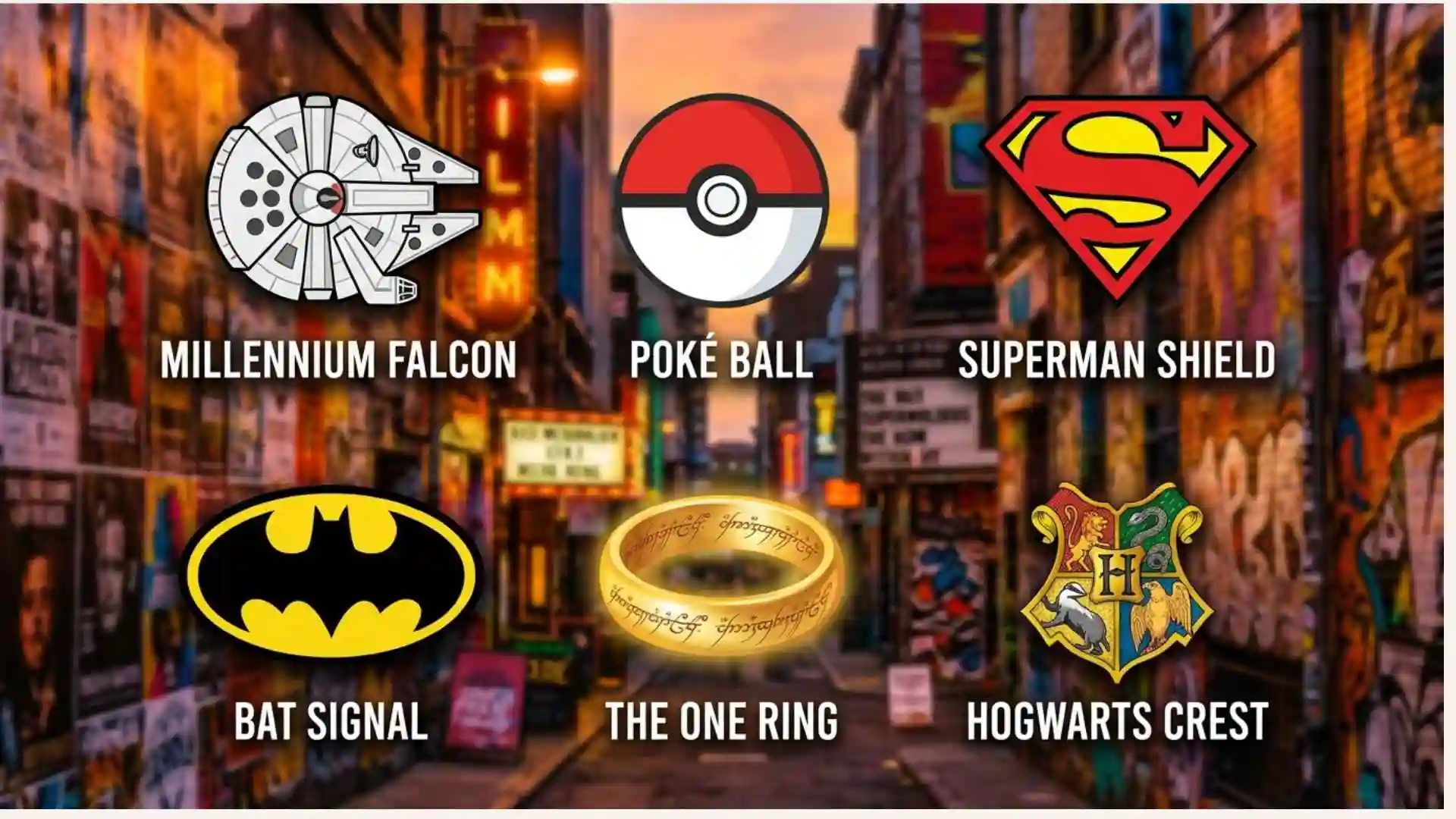
Pop culture symbols are recognizable images, objects, gestures, characters, and signs that carry shared meanings in entertainment and everyday life. They can represent a movie franchise, musical movement, fictional hero, social identity, historical moment, or cultural attitude. Examples include Superman’s “S” shield, the peace sign, the smiley face, the Rolling Stones tongue logo, and the mockingjay from The Hunger Games.
These symbols matter because they communicate ideas faster than words. You may encounter them on clothing, posters, tattoos, social media, fan merchandise, album covers, advertisements, protest signs, and digital memes.
Although some began as commercial logos or fictional props, many evolved into cultural shorthand for hope, rebellion, fandom, nostalgia, freedom, or belonging.
Quick Meaning
Pop culture symbols are visual signs that gain widely recognized meanings through movies, television, music, comics, games, advertising, celebrity culture, and social movements. Their significance can change over time as audiences reinterpret them, transforming fictional emblems or commercial designs into symbols of identity, resistance, nostalgia, humor, or community.
Pop Culture Symbols Overview
| Field | Description |
| Symbol category | Cultural and visual communication |
| Primary meaning | Shared identity, ideas, values, fandom, or emotions |
| Main sources | Movies, television, music, comics, games, advertising, and internet culture |
| Historical roots | Mass printing, theater, political imagery, branding, and popular entertainment |
| Common usage | Clothing, tattoos, posters, merchandise, memes, logos, and protest art |
| Modern meaning | Belonging, nostalgia, rebellion, humor, status, or personal identity |
| Typical forms | Logos, character emblems, hand gestures, objects, costumes, and icons |
| Digital equivalents | Emojis, reaction images, GIFs, avatars, hashtags, and memes |
| Related concepts | Symbols, icons, trademarks, archetypes, fandom, and visual language |
| Meaning stability | Often flexible and dependent on context, generation, and community |
What Do Pop Culture Symbols Mean?
Pop culture symbols represent ideas that audiences learn through repeated exposure. A lightning-bolt scar may suggest Harry Potter, while a bat-shaped emblem often points to Batman. A red pill can refer to a famous choice in The Matrix, and a mockingjay may symbolize resistance because of its role in The Hunger Games.
Their meaning operates on several levels.
First, a symbol may have a direct fictional meaning. Captain America’s shield is a defensive weapon within Marvel stories. Second, it may communicate a moral idea, such as protection, patriotism, courage, or responsibility. Third, fans may use it to express personal identity or membership in a community.
Meaning depends heavily on context. A skull can signal danger, death, piracy, punk culture, heavy metal, or a fictional franchise. A crown may represent royalty, confidence, celebrity, victory, or a specific brand. The same design can therefore carry multiple interpretations without having one universal definition.
Pop culture symbols become powerful when people recognize not only what they depict but also the stories, emotions, and memories attached to them.
History and Origin of Pop Culture Symbols
Pop culture symbols developed from older traditions of visual storytelling, religious imagery, political emblems, family crests, theater costumes, and commercial branding. Humans have always used recognizable images to communicate identity and authority. Modern mass entertainment expanded that practice by distributing the same images to millions of people.
Early Print and Popular Entertainment
Before film and television, newspapers, serialized novels, theater posters, political cartoons, and product advertisements created widely recognized characters and images. Uncle Sam, first used in the nineteenth century and later popularized through recruitment posters, became a personification of the United States.
Comic strips also helped establish recurring visual identities. Distinctive clothing, facial features, props, and speech styles allowed readers to recognize characters immediately.
Cinema and Hollywood
Twentieth-century cinema turned costumes and objects into international symbols. Charlie Chaplin’s bowler hat, cane, mustache, and oversized shoes became inseparable from the Tramp character. Marilyn Monroe’s white dress became associated with Hollywood glamour, while James Dean’s red jacket came to suggest youthful rebellion.
Film studios learned that recognizable designs could promote stories beyond the screen. Posters, toys, costumes, and licensed products helped symbols travel into daily life.
Comic Books and Superheroes
Superhero comics established some of the most enduring pop culture emblems. Superman’s shield, Batman’s bat symbol, Wonder Woman’s double-W design, and Spider-Man’s spider emblem allow audiences to identify characters almost instantly.
These designs work because they combine simple shapes with strong narratives. Over time, they came to represent broader qualities such as hope, justice, fear, power, sacrifice, or responsibility.
Music and Youth Culture
Popular music introduced visual symbols connected to performers, genres, and youth movements. The Rolling Stones tongue-and-lips logo became associated with rock rebellion. David Bowie’s lightning-bolt makeup symbolized theatrical individuality and artistic transformation. Punk culture used safety pins, torn clothing, and rough typography to reject polished mainstream aesthetics.
Album covers, concert posters, music television, and merchandise turned these designs into globally recognized icons.
Television, Video Games, and the Internet
Television created repeated visual exposure inside the home. Video games later introduced symbols such as the Triforce from The Legend of Zelda, the mushroom from Super Mario, and the Vault Boy figure from Fallout.
The internet accelerated symbolic change. Memes, emojis, reaction images, and profile pictures can acquire new meanings within days. Unlike traditional studio-created symbols, many digital symbols develop collectively through sharing, editing, parody, and remixing.
Symbolism and Interpretation
Pop culture symbolism is flexible because audiences actively participate in creating meaning. A designer or writer may introduce a symbol with one purpose, but fans can expand, challenge, or transform its significance.
Traditional Meanings
Many popular symbols draw on familiar human ideas:
- Shields suggest protection and duty.
- Masks suggest hidden identity or transformation.
- Crowns suggest status, victory, or authority.
- Fire suggests destruction, passion, or rebirth.
- Birds suggest freedom, hope, or escape.
- Skulls suggest danger, mortality, or rebellion.
- Stars suggest fame, aspiration, or excellence.
Creators use these familiar associations because audiences understand them quickly.
Modern Meanings
Modern interpretations often connect symbols to fandom and self-expression. Wearing a Jedi emblem can communicate admiration for Star Wars, but it may also express values associated with discipline, hope, balance, or resistance to tyranny.
A symbol may become detached from its original story. People sometimes wear band logos without listening to the band or use fictional emblems mainly because they find the design attractive. This does not erase the original meaning, but it adds a fashion-based interpretation.
Positive Symbolism
Many pop culture symbols represent courage, friendship, imagination, perseverance, individuality, and hope. Superman’s emblem is commonly connected with heroism and optimism. The Rebel Alliance symbol from Star Wars may represent resistance against oppression. The mockingjay often expresses survival and defiance.
Fans may use these signs during difficult times as reminders of characters or stories that inspired them.
Negative Symbolism
Some symbols represent fear, destruction, corruption, or oppressive power. The Galactic Empire emblem in Star Wars, the Deathly Hallows when misunderstood outside its narrative, or the logos of fictional villains can suggest domination or danger.
However, wearing a villain’s symbol does not always mean supporting the villain’s beliefs. It may reflect appreciation for character design, storytelling, irony, or theatrical style.
Psychological Interpretation
Psychologically, pop culture symbols help people organize emotions and social relationships. A familiar emblem can trigger nostalgia, comfort, excitement, or a sense of belonging. It may remind someone of childhood, family traditions, friendships, or an important stage of life.
Symbols also help people express complex identities without lengthy explanations. A tattoo of a fictional object may represent grief, personal growth, resilience, or a moral lesson understood deeply by the wearer.
Cultural Significance
Pop culture symbols function as a shared visual language, but their meanings differ across regions, generations, and social groups.
Generational Differences
Older audiences may associate a smiley face with the optimistic commercial culture of the 1960s and 1970s. Younger internet users may connect it with irony, passive aggression, or digital humor.
Likewise, a cassette tape can symbolize ordinary technology for one generation and retro nostalgia for another. Cultural meaning changes when an everyday object becomes outdated.
Regional Interpretation
A symbol that is widely recognized in the United States may be less familiar elsewhere. Japanese anime and manga symbols, however, have spread globally through streaming, conventions, gaming, and online fan communities.
Regional adaptations also occur. Fans may combine international symbols with local languages, clothing styles, political concerns, or artistic traditions.
Subcultures and Fandoms
Subcultures often assign highly specific meanings to signs. A small symbol may identify members of a gaming community, music scene, television fandom, or comic-book audience.
These visual markers strengthen group identity. They can help strangers recognize shared interests at conventions, concerts, schools, workplaces, and online communities.
Protest and Social Commentary
Fictional symbols sometimes move into real political or social settings. Guy Fawkes masks inspired by V for Vendetta have appeared in protests, where they may symbolize anonymity or resistance to authority. The three-finger salute associated with The Hunger Games has also been adopted in real demonstrations in parts of Asia.
Such uses show that audiences do not passively consume entertainment. They may reinterpret fictional imagery to address real experiences.
Religious and Spiritual Meaning
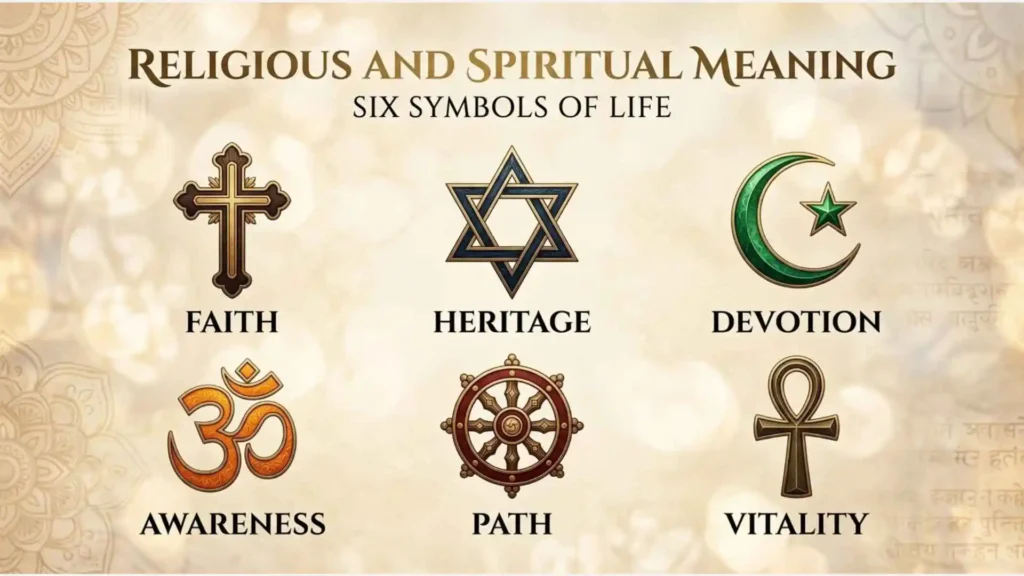
Most pop culture symbols are not sacred in the traditional religious sense. However, many borrow from religious, mythological, and spiritual traditions.
Superhero stories often use themes of sacrifice, resurrection, destiny, temptation, and moral duty. Fantasy franchises may draw on angels, demons, sacred objects, prophecy, or cosmic balance. Jedi philosophy in Star Wars, for example, combines fictional ideas with themes that resemble elements found in several philosophical and religious traditions.
Problems can arise when sacred symbols are removed from their original context and used only as decoration. Crosses, mandalas, Indigenous imagery, Hindu deities, Buddhist symbols, and ancient Egyptian signs have sometimes been commercialized in entertainment and fashion.
A responsible interpretation distinguishes between a fictional adaptation and the living religious tradition from which imagery may have been borrowed. A symbol can have one meaning in a movie and a deeper ceremonial or theological meaning within a community.
Digital and Technical Meaning
In digital culture, symbols function as fast forms of communication. Emojis, reaction icons, avatars, hashtags, and memes can express emotional tone that plain text may not convey clearly.
The heart icon is used for affection, approval, saving content, or showing support. A blue verification badge may indicate authenticity or platform status. A flame emoji can mean heat, excellence, popularity, attraction, or rapid online activity.
Digital symbols are especially dependent on context. A skull emoji may indicate death literally, but in casual online conversation it often means intense laughter. A clown emoji may suggest foolish behavior, embarrassment, or criticism.
Technical systems also turn pop culture images into searchable data. Hashtags group discussions, algorithms identify logos, and Unicode standardizes many characters and emojis across devices. However, franchise emblems and entertainment logos usually do not have official Unicode characters because they may be protected trademarks.
Where Are Pop Culture Symbols Used?
Pop culture symbols appear wherever people communicate identity, stories, or shared interests.
Clothing and Fashion
T-shirts, jackets, hats, sneakers, and jewelry frequently display band logos, superhero emblems, game icons, and film references. Fashion can turn a symbol into a social signal or nostalgic statement.
Tattoos
People choose pop culture tattoos to honor meaningful stories, characters, relationships, or personal experiences. A symbol may represent courage, recovery, loyalty, grief, or childhood memories.
Film and Television
Visual symbols help audiences understand characters and organizations quickly. Costumes, colors, vehicles, weapons, and logos create continuity across sequels and related media.
Music
Musicians use logos, stage costumes, makeup, typography, and hand gestures to build distinct identities. Fans repeat these symbols through merchandise, fan art, and concert behavior.
Video Games
Game symbols identify factions, powers, items, locations, or objectives. They also appear on controllers, online profiles, collectibles, and esports merchandise.
Advertising and Branding
Companies use pop culture references to connect products with familiar stories or emotions. Collaborations between brands and entertainment franchises have made fictional symbols major commercial assets.
Art and Literature
Artists reinterpret famous symbols through painting, sculpture, parody, collage, and street art. Writers may use them as shorthand for a generation, social mood, or cultural conflict.
Social Media
Memes and reaction images transform recognizable scenes into new forms of communication. The original context may remain important, but captions and repetition can give the image an entirely different meaning.
Protests and Public Events
Some symbols are used in demonstrations, charity campaigns, pride events, and public memorials. Their emotional power often comes from familiar stories about justice, freedom, survival, or solidarity.
Common Variations
Pop culture symbols frequently change while retaining their recognizable identity.
Color Variations
A symbol may appear in alternate colors for special editions, character transformations, sports partnerships, or social campaigns. Color changes can also alter emotional tone. Red may suggest danger or passion, while black can imply mystery, mourning, or sophistication.
Simplified Designs
Modern logos are often simplified for mobile screens, apps, and small merchandise. Fine details may disappear while the basic silhouette remains.
Parody Versions
Artists and fans regularly remix symbols for humor or criticism. A familiar emblem may be combined with another franchise, political message, or local reference.
Fan-Made Adaptations
Fan communities create personalized versions using names, flags, pride colors, occupations, or cultural patterns. These adaptations allow a mass-produced symbol to express individual identity.
Retro and Modern Redesigns
Long-running franchises update symbols to match changing design trends. Batman’s emblem, for example, has appeared in many shapes across comics, television programs, movies, and games.
Common Misconceptions About Pop Culture Symbols
Every Symbol Has One Fixed Meaning
Pop culture symbols rarely have only one meaning. Their interpretation can change according to the story, audience, location, and period.
Wearing a Symbol Means Supporting Everything It Represents
People may wear a symbol for its artistic design, nostalgic value, fictional connection, or ironic effect. Clothing alone does not always reveal a person’s beliefs.
All Famous Symbols Are Ancient
Many highly recognizable icons are relatively recent. Their cultural power comes from mass media and repeated exposure rather than great age.
Fictional Symbols Have No Real-World Importance
Fictional signs can influence language, fashion, political expression, charity work, tourism, and personal identity. Their origin may be fictional, but their social impact can be real.
Similar Designs Always Share the Same Meaning
A triangle, star, skull, or lightning bolt can appear in many unrelated traditions and franchises. Visual similarity does not prove historical or ideological connection.
Internet Meanings Are Universal
Emoji and meme interpretations vary among communities. A sign used playfully in one group may seem rude, confusing, or serious in another.
10 Interesting Facts About Pop Culture Symbols
- Simple designs are often the most memorable. Strong silhouettes and limited details make symbols easier to recognize on screens, clothing, toys, and posters.
- Fictional symbols can enter real political language. Protesters have adopted images from films and novels because familiar stories can communicate resistance quickly.
- Merchandise strengthens symbolic recognition. Toys, shirts, lunch boxes, posters, and collectibles repeatedly expose audiences to the same designs outside the original story.
- A symbol may outlive its original audience. Younger generations often recognize famous emblems even when they have not read the comic, watched the film, or heard the album that introduced them.
- Color can be as important as shape. The red-and-yellow Superman shield or the black-and-yellow Batman emblem may remain recognizable even in highly simplified forms.
- Fans help determine meaning. Fan art, discussion, cosplay, and online remixing can expand a symbol beyond the creator’s original intention.
- Some props become symbols without being logos. Dorothy’s ruby slippers, Indiana Jones’s hat, and the DeLorean from Back to the Future represent entire stories through recognizable objects.
- Digital culture shortens the life cycle of symbols. A meme image can become globally recognizable and then fade from common use within months.
- Nostalgia increases symbolic value. Ordinary objects such as arcade machines, VHS tapes, and cassette players now represent particular decades and emotional memories.
- Legal ownership and cultural meaning can overlap. A company may control the commercial use of a trademark, while audiences still develop personal and social meanings around it.
Related Symbols and How They Differ
| Related Symbol Type | Connection | Key Difference |
| Brand logos | Both create fast recognition | Brand logos primarily identify companies or products |
| Religious symbols | Both communicate shared beliefs | Religious symbols may carry sacred and ceremonial authority |
| Political symbols | Both unite groups around ideas | Political symbols relate directly to governance or ideology |
| National symbols | Both create collective identity | National symbols represent countries or civic traditions |
| Archetypes | Both express familiar ideas | Archetypes are recurring character or story patterns |
| Emojis | Both communicate meaning visually | Emojis are standardized digital characters |
| Memes | Both rely on shared knowledge | Memes usually change through copying and remixing |
| Trademarks | Many pop culture symbols are protected | Trademark is a legal category, not a symbolic meaning |
| Icons | Both simplify information | An icon may serve a practical interface function |
| Mascots | Both personify identities | Mascots usually represent teams, institutions, or brands |
Frequently Asked Questions
What are pop culture symbols?
Pop culture symbols are recognizable images, objects, gestures, characters, or designs connected to widely consumed entertainment and media. They gain meaning through movies, television, music, comics, video games, advertising, celebrities, and internet culture. People use them to communicate fandom, identity, emotions, values, memories, or social attitudes.
What are some famous examples of pop culture symbols?
Famous examples include Superman’s shield, Batman’s bat emblem, the Rolling Stones tongue logo, the peace sign, the smiley face, the Star Wars Rebel Alliance symbol, Harry Potter’s lightning-bolt scar, the Triforce, the mockingjay, and the Ghostbusters logo. Recognition varies by country, generation, and community.
Why are pop culture symbols important?
They condense complex stories and emotions into recognizable visual forms. A symbol can help people express belonging, nostalgia, admiration, resistance, or personal values without lengthy explanations. These signs also influence fashion, advertising, politics, art, tourism, and digital communication.
How does a pop culture symbol become iconic?
A symbol becomes iconic through memorable design, repeated exposure, emotional storytelling, media distribution, merchandising, and audience participation. Simplicity also helps because clear shapes are easier to reproduce and recognize. Long-term relevance usually depends on whether new generations continue encountering and reinterpreting it.
Can the meaning of a pop culture symbol change?
Yes. Meaning can change when new audiences, historical events, political movements, memes, or commercial campaigns reuse a symbol. A design that once represented a fictional group may later express real-world resistance, while an ordinary object may become a nostalgic emblem after its technology becomes outdated.
Are all pop culture symbols protected by copyright or trademark?
No. Protection depends on the symbol, its age, ownership, legal jurisdiction, and intended use. Many franchise logos are protected trademarks, while particular artistic designs may be copyrighted. General shapes and older public-domain imagery may receive less protection. Commercial use requires greater legal caution than personal commentary or analysis.
Why do people get pop culture symbol tattoos?
People often choose these tattoos because a story, character, song, or game helped shape their identity. The symbol may represent courage, friendship, grief, survival, imagination, or a major life experience. Its personal meaning can be deeper than its official meaning within the original franchise.
Are memes considered pop culture symbols?
Memes can function as pop culture symbols when a repeated image, phrase, gesture, or character develops a shared meaning. Unlike traditional logos, memes often evolve collectively. Users modify them through captions and new contexts, so their meanings can change rapidly across online communities.
Can pop culture symbols be misunderstood?
Yes. A person may not recognize the original reference, or the symbol may have different meanings in another culture. Some designs also resemble political, religious, or extremist imagery by coincidence. Understanding the source, context, and audience helps prevent incorrect or harmful interpretations.
What is the difference between a pop culture symbol and an icon?
A pop culture symbol carries shared cultural meaning, while an icon may simply represent a function, object, person, or application. The categories overlap. A character emblem can be both a symbol and an icon, but a standard computer folder icon usually serves a practical purpose rather than expressing cultural identity.
Key Takeaways
- Pop culture symbols communicate shared meanings through familiar images, objects, gestures, and designs.
- They commonly originate in movies, television, music, comics, gaming, advertising, and internet culture.
- Their meanings may include hope, rebellion, identity, nostalgia, power, humor, or belonging.
- Audiences help create meaning through fashion, tattoos, fan art, memes, cosplay, and public use.
- A symbol’s interpretation can change across generations, cultures, regions, and social groups.
- Fictional symbols can gain real-world political, emotional, and social significance.
- Similar-looking designs do not always share the same origin or meaning.
- Context is essential when interpreting religious, cultural, political, or controversial imagery.
Conclusion
Pop culture symbols are more than decorative logos or recognizable references. They are part of a living visual language shaped by storytelling, technology, commerce, memory, and audience participation. A costume detail, fictional emblem, musical logo, or digital meme can communicate an entire history of ideas in a single glance.
Their power comes from the relationship between image and experience. People remember the characters, songs, struggles, communities, and personal moments attached to them. As media continues to evolve, new pop culture symbols will emerge, while older ones will gain fresh interpretations. Understanding their origins and contexts allows us to see how entertainment imagery becomes a meaningful part of everyday cultural life.

I am Amelia Carter, an English language educator and educational writer who enjoys making difficult ideas simple and easy to understand. At LearnNestly, I write about English words, grammar, everyday expressions, and language questions that people often find confusing. I believe learning should feel practical, clear, and enjoyable rather than overwhelming. Through my writing, I try to give readers explanations they can understand and use in real life.
Books:
- The Everyday English Handbook
- Words Made Simple
 Daniel Brooks
 Ethan Mitchell