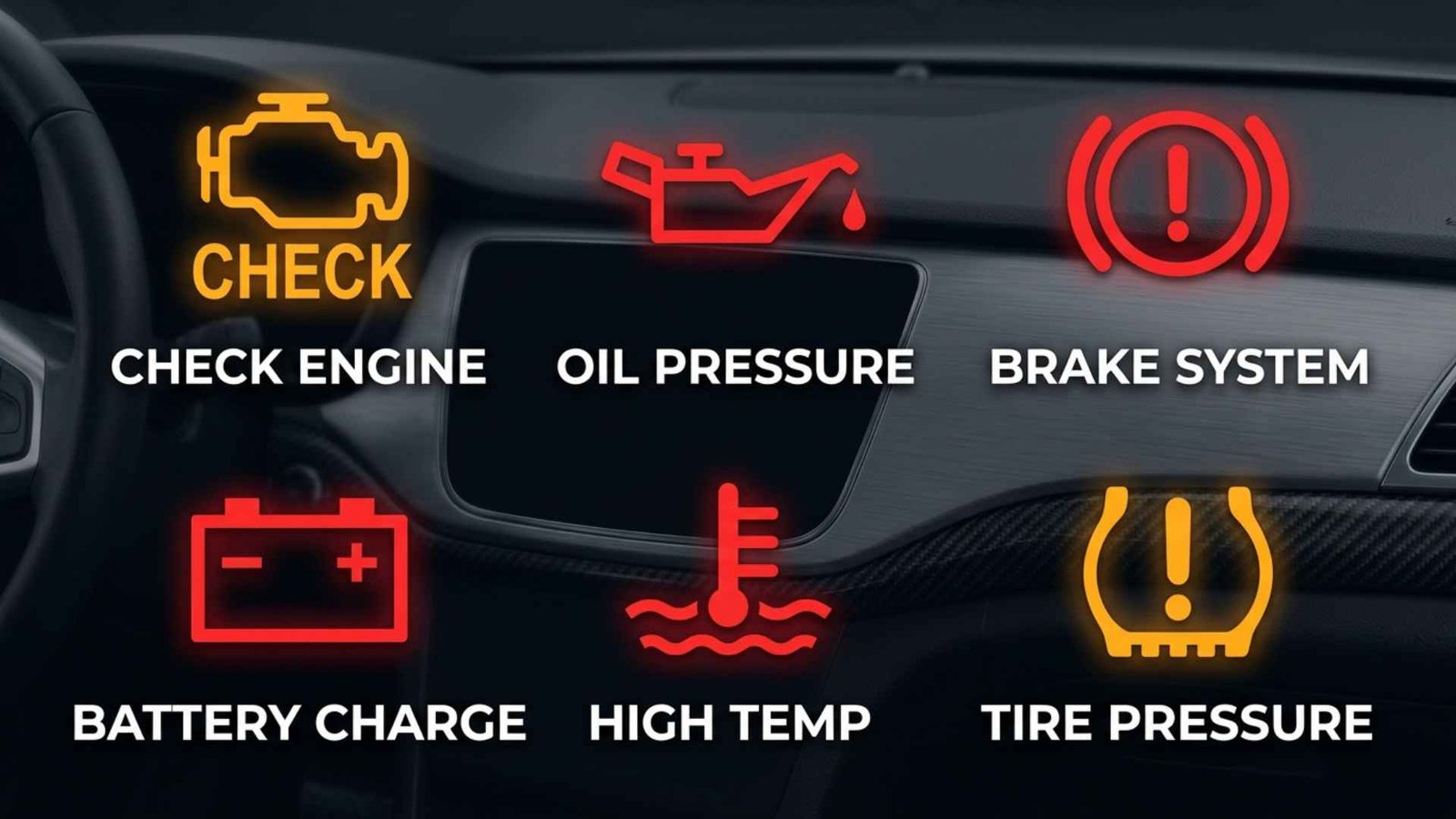
Symbols on dashboard displays act as your car’s visual communication system. They tell you when a feature is active, remind you to take an action, or warn you that a mechanical or safety system may have failed.
Some dashboard lights are harmless status indicators, while others require you to stop driving immediately. The meaning depends on the symbol, its color, whether it flashes, and how the vehicle behaves.
Learning these signs helps you avoid breakdowns, protect passengers, and prevent a small problem from becoming an expensive repair.
Quick Meaning
Symbols on dashboard displays communicate the condition of a vehicle’s safety, engine, braking, electrical, tire, lighting, and driver-assistance systems. Green or blue usually indicates normal operation, yellow or amber calls for attention, and red often signals an urgent safety issue. Always confirm the exact meaning in your vehicle’s owner’s manual.
Dashboard Symbol Overview Table
| Dashboard symbol | Primary meaning | Typical color | Recommended response |
| Oil can | Low oil pressure or oil-system warning | Red | Stop safely and switch off the engine |
| Thermometer over waves | Engine coolant temperature too high | Red | Stop and allow the engine to cool |
| Battery | Charging-system fault | Red | Reduce electrical use and seek service |
| Circle with “!” or “BRAKE” | Brake-system or parking-brake warning | Red | Check the parking brake; stop if it remains on |
| ABS | Anti-lock braking system fault | Amber | Drive cautiously and arrange service |
| Engine outline | Engine or emissions-system fault | Amber | Check severity and schedule diagnosis |
| Horseshoe-shaped tire with “!” | Low tire pressure or TPMS fault | Amber | Check tire pressure and inspect for damage |
| Person with seat belt | Seat belt not fastened | Red | Fasten the belt |
| Seated person with circle | Airbag or restraint-system fault | Red or amber | Have the system inspected promptly |
| Skidding car | Stability or traction-control activity/fault | Amber | Slow down; inspect if constantly illuminated |
| Gas pump | Low fuel level | Amber | Refuel soon |
| Windshield with spray | Low washer-fluid level | Amber | Refill washer fluid |
| Headlamp with straight lines | High-beam headlights active | Blue | Dim for oncoming traffic |
| Headlamp with downward lines | Low-beam headlights active | Green | No action required |
| Two opposing arrows | Hazard lights or turn indicators | Green | Status indicator |
| Wrench or spanner | Service or powertrain warning | Amber | Check the manual and arrange service |
| Car with key or padlock | Immobilizer or security-system status | Red or amber | Check the key and security system |
| Steering wheel with “!” | Power-steering fault | Red or amber | Steering may become heavy; seek service |
| Cup of coffee | Driver-attention alert | Amber | Take a safe break |
| Lane lines | Lane-departure or lane-keeping system | Green, white, or amber | Follow the displayed system status |
| Car with distance bars | Adaptive cruise or collision-warning system | Green, white, or amber | Maintain control and verify system status |
| Plug or battery gauge | Electric-vehicle charging or battery status | Green, blue, amber, or red | Follow the vehicle-specific message |
Dashboard graphics are standardized to a degree, but designs and behavior still vary among manufacturers and models. ISO 2575 specifies symbols for vehicle controls, indicators, and telltales to make them easier to identify across passenger cars, commercial vehicles, and buses.
What Do Symbols on Dashboard Displays Mean?
Dashboard symbols represent one of three basic messages: a feature is operating, the driver needs to take action, or a system has detected a fault.
A modern instrument cluster may display dozens of icons because vehicles contain interconnected electronic systems. Sensors monitor engine temperature, oil pressure, wheel speed, tire pressure, battery charging, emissions, seat belts, airbags, steering, lighting, and driver-assistance features.
Manufacturers commonly divide dashboard lights into three groups.
Warning Lights
Warning lights identify conditions that may affect safety, reliability, or vehicle operation. Examples include the oil-pressure, brake-system, engine-temperature, battery, and airbag lights.
A warning should never be judged by shape alone. Its color, flashing pattern, accompanying message, sound, and the vehicle’s behavior all matter.
Indicator Lights
Indicator lights confirm that a system is active. High beams, turn signals, fog lights, cruise control, and lane-centering systems often use green or blue indicators.
These lights normally do not represent a malfunction. However, an indicator that flashes unexpectedly or changes color may signal a problem.
Reminder and Information Lights
These symbols prompt routine actions, such as fastening a seat belt, closing a door, refueling, adding washer fluid, or scheduling maintenance.
They may be less urgent than red warning lights, but ignoring them can still create safety or reliability problems.
What Do Dashboard Light Colors Mean?
Color provides a quick estimate of urgency, but it does not replace the owner’s manual.
Red Dashboard Symbols
Red normally indicates danger, a serious malfunction, or an action that must be taken immediately. Common red lights include:
- Low engine-oil pressure
- Excessive coolant temperature
- Brake-system fault
- Charging-system failure
- Unfastened seat belt
- Open door or hood
- Critical steering or airbag warning
When a red mechanical warning appears while driving, move to a safe location as soon as conditions allow. Continuing to drive with low oil pressure, overheating, or a serious brake problem can cause engine damage, loss of control, or a collision.
Yellow or Amber Dashboard Symbols
Yellow and amber usually mean caution, reduced system performance, or a fault that needs attention soon. Examples include:
- Check-engine light
- ABS warning
- Tire-pressure warning
- Traction-control fault
- Low fuel
- Service reminder
- Driver-assistance sensor problem
The vehicle may remain drivable, but you should investigate the cause promptly.
Green Dashboard Symbols
Green lights usually confirm that a function is active and working normally. Turn signals, low-beam headlights, cruise control, and some driver-assistance systems commonly use green.
Blue Dashboard Symbols
Blue most often identifies high-beam headlights. Some electric or hybrid vehicles also use blue for charging or energy-related information.
White or Gray Dashboard Symbols
White and gray generally communicate information, availability, or a system that is ready but not actively controlling the vehicle. These colors appear frequently in digital instrument clusters.
History and Origin of Dashboard Symbols
Dashboard symbols developed as vehicles gained more instruments, controls, and safety systems.
Early automobiles had simple dashboards with a small number of mechanical gauges. Drivers monitored speed, fuel level, oil pressure, engine temperature, and electrical charging through needles, numbers, or basic lamps.
As vehicles became more complex, manufacturers needed a faster way to communicate without filling the dashboard with long written labels. Pictograms offered several advantages:
- They occupied less space.
- Drivers could recognize them quickly.
- They reduced dependence on written language.
- Manufacturers could use similar displays in multiple countries.
- They remained visible in low-light conditions.
International and national standards gradually improved consistency. ISO 2575 now covers conventional signs used for vehicle controls, indicators, and telltales and also addresses the colors used to communicate correct operation or malfunction.
In the United States, federal vehicle standards regulate certain controls, displays, and warning identifiers. Some regulated warnings may use required words or abbreviations rather than relying only on a pictogram. For example, NHTSA has explained that particular brake and anti-lock brake warnings may require identifiers such as “BRAKE” and “ABS,” depending on the applicable standard.
Digital instrument clusters have expanded the visual language further. A single screen can now change icons, display written explanations, show animations, and prioritize warnings according to severity.
Major Symbols on Dashboard Displays and Their Meanings
Oil-Pressure Warning Light
The oil-can symbol usually means the engine has lost adequate oil pressure. It does not simply mean that an oil change is due.
Oil pressure creates a protective film between moving engine parts. If pressure drops, internal components may suffer severe damage within a short time.
When the red oil-pressure light stays on while the engine is running:
- Pull over safely.
- Switch off the engine.
- Check the oil level after waiting briefly.
- Do not continue driving if the level is normal but the light remains on.
- Arrange professional assistance.
Adding oil may help when the level is low, but it will not repair a failed oil pump, blocked pickup, damaged sensor, or internal engine problem.
Engine Coolant Temperature Warning
A thermometer above wavy lines indicates that engine temperature is too high. Steam, reduced power, a sweet smell, or a rising temperature gauge may accompany it.
Turn off the air conditioning, pull over safely, and shut down the engine. Never remove a hot radiator or coolant-reservoir cap because pressurized coolant can cause severe burns.
Possible causes include low coolant, a leak, cooling-fan failure, thermostat trouble, water-pump failure, or a blocked radiator.
Battery or Charging-System Light
The battery-shaped symbol generally warns about the charging system, not necessarily the battery alone.
The alternator, drive belt, wiring, voltage regulator, or battery connections may have failed. The engine may continue running temporarily on stored electrical energy, but it can eventually stall.
Turn off unnecessary electrical equipment and reach a safe location or repair facility. If the steering becomes heavy or the temperature rises, stop immediately because a broken accessory belt may affect several systems.
Brake-System Warning Light
A red circle containing an exclamation mark, the word “BRAKE,” or a similar design can indicate:
- The parking brake is engaged.
- Brake fluid is low.
- A hydraulic brake fault exists.
- Electronic brake distribution has failed.
- Another serious brake condition is present.
Release the parking brake fully. If the light stays on, the brake pedal feels unusual, or braking performance changes, stop driving and have the vehicle inspected.
ABS Warning Light
“ABS” inside a circle indicates a fault in the anti-lock braking system.
Normal braking may still function, but the wheels may lock during hard braking or on slippery roads. Stability control and traction control may also be limited because those systems often use the same wheel-speed sensors.
Drive cautiously, increase following distance, and schedule diagnosis.
Check-Engine Light
The engine-shaped icon is the malfunction indicator lamp. It usually relates to the engine-management or emissions-control system.
A steady light can result from a loose fuel cap, sensor failure, ignition problem, fuel-system fault, or emissions issue. A flashing check-engine light is more urgent and may indicate active misfiring that can overheat and damage the catalytic converter.
Reduce speed and engine load. If the vehicle shakes, loses power, smells unusual, or the light flashes continuously, stop driving and seek assistance.
Tire-Pressure Monitoring System Light
The tire-pressure monitoring system, or TPMS, symbol resembles a tire cross-section with an exclamation mark.
It means that one or more tires may be significantly underinflated. NHTSA advises drivers to inspect the tires and check pressure as soon as possible when this symbol appears.
Check pressure when the tires are cold and inflate them according to the vehicle manufacturer’s specification, usually found on the driver-side door label. Do not use the maximum pressure printed on the tire sidewall as the routine target.
A flashing TPMS light that later stays on often indicates a sensor or monitoring-system fault.
Airbag Warning Light
A seated person facing a circle represents the supplemental restraint system, which may include airbags, impact sensors, seat-belt pretensioners, and occupancy sensors.
If the light remains on after startup, the system may not protect occupants correctly in a collision. It may also indicate that an airbag has been intentionally disabled under specific conditions.
Have the restraint system inspected promptly.
Traction-Control and Stability-Control Symbol
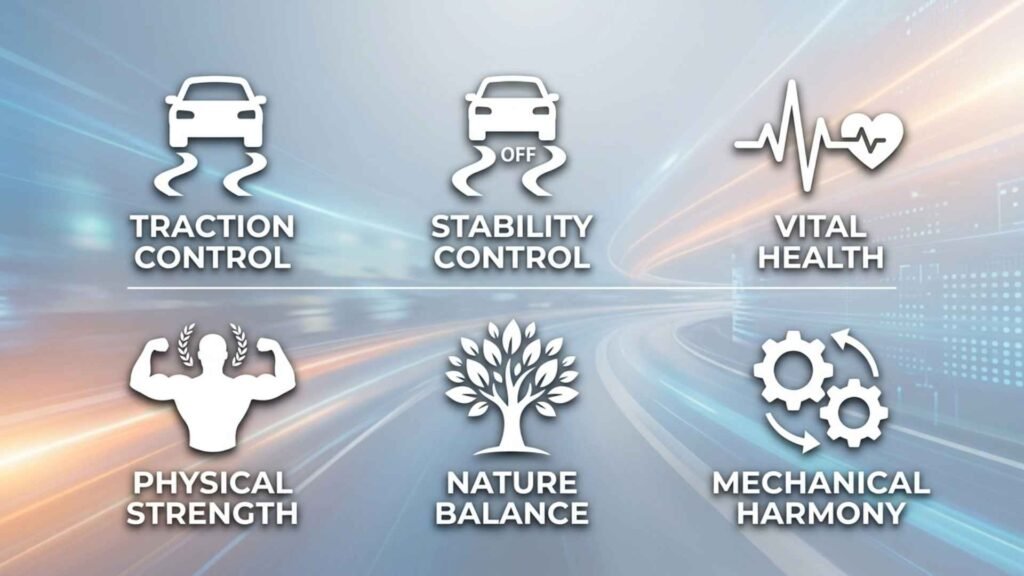
A car with wavy skid marks represents traction control or electronic stability control.
A flashing symbol usually means the system is actively reducing wheelspin or helping correct a skid. Slow down and steer smoothly.
A continuously illuminated symbol may mean the system is switched off or has detected a fault.
Power-Steering Warning
A steering wheel, sometimes combined with an exclamation mark, indicates a fault in hydraulic or electric power steering.
The vehicle may still steer, but much greater effort could be required, particularly at low speeds. Stop safely if steering assistance suddenly changes.
Diesel Particulate Filter Warning
Diesel vehicles may display a filter-shaped symbol when soot has accumulated in the diesel particulate filter.
Some vehicles can clean the filter through regeneration during sustained driving. Others require a specific procedure or workshop service. Ignoring the warning can lead to reduced power, increased emissions, or expensive filter damage.
Follow the exact instructions in the owner’s manual.
Glow-Plug Warning
A yellow coil-shaped icon appears mainly in diesel vehicles. It normally illuminates before starting while the glow plugs heat the combustion chambers.
Wait for the light to switch off before starting. If it flashes or remains on while driving, the engine-management or glow-plug system may need service.
Fuel Warning Light
The gas-pump symbol means fuel is low. The remaining distance varies widely with driving conditions, vehicle design, road gradient, and fuel-gauge accuracy.
Refuel soon rather than depending on a fixed number of remaining miles. Frequently operating near empty can also expose the fuel pump to heat and sediment.
Symbols in Electric and Hybrid Vehicles
Electric and hybrid vehicles introduce additional icons for:
- High-voltage battery level
- Charging connection
- Charging fault
- Regenerative braking
- Reduced propulsion power
- Electric motor temperature
- Hybrid-system malfunction
- Ready-to-drive status
- Battery conditioning
- Energy-flow direction
A “READY” indicator is especially important because an electrified vehicle may be able to move even when the engine is silent.
A turtle icon often means propulsion power is limited. The cause may be a low battery, extreme battery temperature, or a system fault. Follow the displayed message and move to a safe location when necessary.
Technical Meaning and Standardization
Dashboard icons are part of a vehicle’s human-machine interface. Their purpose is to communicate important information with minimal reading and distraction.
In technical language, a telltale is an optical signal that shows the activation, condition, or malfunction of a system. An indicator often shows a measured value or operating state, while a control symbol identifies the function of a switch, lever, or button.
Effective automotive symbols rely on several design principles:
- Recognizable shape: The image should suggest the related component or action.
- Consistent color: Color helps communicate urgency or operating status.
- Visual contrast: The icon must remain visible in daylight and darkness.
- Limited complexity: Drivers need to understand it quickly.
- Standard positioning: Important warnings should be clearly visible.
- Redundancy: Critical faults may combine an icon, text message, chime, and altered vehicle behavior.
ISO 2575 was created to improve identification and use across different types of road vehicles. However, an international standard does not make every dashboard identical. Vehicle age, region, equipment package, manufacturer, and software can still change an icon’s appearance or function.
Where Dashboard Symbols Are Used
Dashboard symbols appear in more places than the traditional gauge cluster.
Instrument Clusters
The instrument cluster places warnings near the speedometer, tachometer, fuel gauge, or digital driving display.
Head-Up Displays
Some vehicles project speed, navigation guidance, collision alerts, and driver-assistance indicators onto the windshield.
Infotainment Screens
Detailed warnings may appear on the center screen with diagrams, explanations, or recommended actions.
Steering-Wheel and Control Buttons
Cruise control, voice control, heated steering, driver assistance, lighting, and media buttons use symbols to conserve space.
Mobile Vehicle Apps
Connected-car apps can reproduce charging, tire-pressure, security, maintenance, and fault notifications on a phone.
Diagnostic Equipment
Repair technicians use scan tools to read diagnostic trouble codes associated with dashboard warnings. The code helps identify the affected circuit or detected condition, but it does not always identify the failed part by itself.
Common Variations
Dashboard symbols often differ slightly without changing their basic meaning.
Word-Based and Picture-Based Warnings
A brake warning may show “BRAKE,” an exclamation mark inside a circle, or both. A tire-pressure warning may appear alone or beside a written message naming the affected tire.
Solid and Flashing Lights
A solid light usually reports an existing condition. A flashing light often increases urgency or shows that a system is actively working.
This pattern is not universal. Always check the vehicle manual.
Monochrome and Color Displays
Traditional clusters use colored bulbs. Digital displays can change the same icon from white to green, amber, or red as the system moves from available to active, limited, or failed.
Regional Differences
Vehicles sold in different markets may use different words, units, colors, or legally required identifiers. Miles and kilometers, gallons and liters, and left-hand versus right-hand driving layouts can also affect display design.
Manufacturer-Specific Icons
Luxury, electric, off-road, and performance vehicles may include symbols for:
- Adjustable suspension
- Differential locks
- Terrain modes
- Launch control
- Battery preconditioning
- Night vision
- Automatic parking
- Trailer assistance
- Hill-descent control
Symbolism and Psychological Interpretation
Dashboard icons are functional rather than spiritual, but their design still uses familiar symbolic associations.
Red suggests danger, stopping, heat, blood, and urgency. Yellow resembles caution signs and encourages attention without always demanding an immediate stop. Green communicates permission, readiness, or normal operation. Blue often identifies lighting or a special active mode.
Shapes also influence understanding. Exclamation marks express warning. Circles may represent wheels, brakes, or enclosed systems. Wavy lines suggest heat, liquid, or unstable movement. Arrows indicate direction, flow, or change.
These visual shortcuts help drivers interpret information quickly, even when they do not know the technical name of the system.
Cultural and Regional Significance
Dashboard symbols are designed to cross language barriers, yet interpretation is still shaped by local driving experience, vehicle regulations, and visual conventions.
A driver familiar with manual-transmission diesel vehicles may immediately recognize glow-plug and clutch symbols. Someone who has only driven electric cars may be more familiar with charging plugs, battery-temperature alerts, and regenerative-braking indicators.
Regional regulations can also influence whether a warning uses a symbol, a word, or both. For this reason, importing a vehicle or driving a rental car abroad may expose drivers to unfamiliar abbreviations and display behavior.
The owner’s manual remains the most reliable source for the exact vehicle.
Common Misconceptions About Dashboard Symbols
“Every Red Light Means the Car Will Stop Immediately”
Not always. A red seat-belt reminder may be corrected by fastening the belt, while a red oil-pressure warning may require immediate engine shutdown. Color signals urgency, but the symbol identifies the problem.
“The Battery Light Means I Need a New Battery”
The battery icon usually indicates a charging-system problem. The battery may be healthy while the alternator, belt, wiring, or voltage regulator has failed.
“The Oil Light Is an Oil-Change Reminder”
The red oil-can symbol generally concerns oil pressure, which can be urgent. Maintenance reminders usually use text, a wrench, an oil-life percentage, or a separate service symbol.
“The Check-Engine Light Identifies One Specific Fault”
It can represent many different engine or emissions conditions. A diagnostic scan is needed to retrieve stored trouble codes and begin proper testing.
“A Warning Light Can Be Reset to Fix the Problem”
Clearing a light erases the visible warning or stored information, but it does not repair the underlying cause. The warning usually returns if the fault remains.
“All Manufacturers Use Exactly the Same Symbols”
Many symbols follow shared conventions, but appearance, color, behavior, and meaning can still vary. Ford, for example, distinguishes warning lamps that alert drivers to conditions that may become serious from indicator lights that show when features are in use.
“No Warning Light Means the Vehicle Has No Problems”
Some mechanical issues develop before the control system detects them. Unusual sounds, smells, leaks, vibration, smoke, handling changes, or poor braking still require attention.
What Should You Do When a Dashboard Symbol Appears?
Use a simple four-step response.
1. Identify the Color and Symbol
Red usually requires immediate attention. Amber usually calls for caution and timely inspection. Green, blue, white, and gray are often informational.
2. Observe the Vehicle
Check for smoke, unusual smells, vibration, loss of power, heavy steering, poor braking, overheating, or strange sounds.
3. Read the Message and Manual
Modern vehicles often display explanatory text. Consult the warning-lights section of the owner’s manual because the same general icon can have model-specific instructions.
4. Choose the Safest Action
Stop immediately when continued driving could damage the vehicle or endanger occupants. For less urgent warnings, reduce load, drive cautiously, and arrange diagnosis.
Never stop abruptly in an unsafe traffic lane simply because a warning appears. Use hazard lights, reduce speed smoothly, and move to a secure location.
Interesting Facts About Dashboard Symbols
- Dashboard symbols form a practical visual language. They allow manufacturers to communicate across different spoken languages without translating every label.
- The same icon can carry different levels of urgency. A stability-control symbol may flash during normal intervention but remain solid when the system is disabled or faulty.
- A warning lamp may illuminate briefly during startup on purpose. This bulb check helps confirm that the light and monitoring circuit can operate.
- Some systems share sensors. One failed wheel-speed sensor can trigger ABS, traction-control, stability-control, and driver-assistance warnings at the same time.
- Digital dashboards can prioritize information. A critical red warning may temporarily replace navigation or entertainment details so the driver notices it.
- Cold weather can trigger tire-pressure warnings. Air pressure decreases as temperature falls, so a tire that was marginally inflated may trigger TPMS on a cold morning.
- The check-engine light is tied closely to emissions monitoring. Many faults appear because the vehicle detects that combustion or emissions-control performance is outside expected limits.
- Electric cars may appear “off” while ready to move. The READY indicator replaces the sound of an idling engine as the clearest confirmation that propulsion is available.
- Not every displayed icon is a warning. Many symbols simply confirm that headlights, cruise control, turn signals, or assistance features are active.
- Written messages have not replaced pictograms. Manufacturers commonly combine both because an icon attracts attention quickly while text provides detail.
Related Dashboard Symbols
Maintenance Wrench
The wrench usually indicates scheduled service or a powertrain-related condition. It differs from the check-engine light, although the two can appear together.
Master Warning Triangle
A triangle containing an exclamation mark is a general warning. It directs the driver to another message that explains the specific issue.
Information Symbol
A lowercase “i” in a circle usually means an informational message is available. It is normally less urgent than the master warning triangle.
Door-Ajar Symbol
A top-view vehicle with an open panel shows that a door, trunk, liftgate, or hood may not be fully latched.
Key Warning
A key, key fob, or car with a padlock relates to the immobilizer, key battery, key detection, or vehicle security system.
Forward-Collision Warning
A vehicle with a star, impact lines, or another car ahead represents collision warning or automatic emergency braking. Amber may mean limited availability, while red may indicate an immediate hazard.
Lane-Departure Warning
A car between lane lines indicates lane monitoring. White often means standby, green can mean active tracking, and amber may show departure or a fault.
Start-Stop Symbol
An “A” surrounded by a circular arrow identifies automatic engine stop-start. A crossed-out or amber version may mean the system is unavailable.
Frequently Asked Questions
What are the most serious symbols on dashboard displays?
The most serious commonly include the red oil-pressure, engine-temperature, brake-system, charging-system, steering, and restraint-system warnings. A flashing check-engine light can also be urgent. Stop in a safe place when a symbol indicates possible engine damage, braking loss, overheating, electrical failure, or impaired vehicle control.
Can I drive with a yellow dashboard warning light?
You can often drive a short distance with a steady yellow warning if the vehicle behaves normally, but it should not be ignored. Reduce speed, avoid heavy loads, read the displayed message, and arrange inspection. Stop if the light flashes, turns red, or appears with smoke, overheating, poor braking, severe vibration, or power loss.
Why do all dashboard lights appear when I start the car?
Many vehicles perform a startup bulb and system check. The warning lights illuminate briefly so the car can verify the display and monitored circuits. Most should switch off after the engine starts or the system completes its test. A light that remains on may indicate an active condition or malfunction.
What does a flashing dashboard light mean?
Flashing usually indicates greater urgency or active system operation. A flashing skid-control light may mean the system is correcting wheelspin, while a flashing check-engine light may warn of severe misfiring. Because behavior differs by symbol and vehicle, read the owner’s manual and any accompanying message immediately.
Why did several dashboard symbols turn on at once?
Multiple systems may depend on the same sensor, electrical supply, network, or control module. A weak battery, charging fault, damaged wheel-speed sensor, communication problem, or low voltage can trigger several lights. Professional diagnosis is often needed rather than replacing parts based only on the symbols.
What does an exclamation mark on the dashboard mean?
Its meaning depends on the shape surrounding it. An exclamation mark inside a tire indicates low tire pressure, inside a circle commonly relates to brakes, and inside a triangle is usually a master warning. Check the color, surrounding design, written message, and owner’s manual before deciding what action to take.
Can low battery voltage cause dashboard warning lights?
Yes. Low voltage can disrupt control modules, sensors, electronic steering, braking systems, and communication networks. This may cause several warnings to appear together. A technician should test the battery, charging system, connections, and stored fault codes instead of assuming every illuminated system has failed independently.
How do I turn off a dashboard warning symbol?
Correct the condition that caused it. Fasten the seat belt, close the door, inflate the tires, refuel, or repair the faulty system as appropriate. Do not disconnect the battery or clear diagnostic codes merely to hide a warning. Some lights require a drive cycle, calibration, or scan tool after repair.
Are dashboard symbols universal?
Many common symbols are standardized or follow widely recognized conventions, but they are not completely universal. Shape, color, wording, flashing behavior, and urgency may vary by manufacturer, model year, country, and equipment level. The vehicle’s official owner’s manual provides the most accurate explanation.
Where can I find the meaning of a symbol not listed here?
Open the warning-lights, instrument-cluster, or information-display section of your owner’s manual. Many manufacturers also provide searchable online manuals by model and year. Record the icon’s color, shape, accompanying message, and driving conditions so a dealer or qualified technician can identify it accurately.
Key Takeaways
- Symbols on dashboard displays communicate operating status, reminders, cautions, and serious faults.
- Red usually means urgent action; yellow or amber means caution or service soon.
- Green, blue, white, and gray commonly indicate active, ready, or informational states.
- Stop driving for oil-pressure, overheating, serious brake, or severe steering warnings.
- A steady warning and a flashing warning may have different meanings.
- The same symbol can vary slightly between manufacturers and regions.
- Never replace diagnosis with guesswork or simply reset a warning light.
- Check the owner’s manual for instructions specific to your vehicle.
- Pay attention to sounds, smells, handling, smoke, and performance as well as lights.
- When safety is uncertain, pull over securely and request professional assistance.
Conclusion
Symbols on dashboard displays give drivers an immediate view of the vehicle’s health, safety systems, and active features. Understanding their colors and basic categories helps you separate normal indicators from warnings that require urgent action.
No general guide can cover every manufacturer-specific icon, but the central rule is simple: notice the symbol, assess the vehicle, read the accompanying message, and follow the owner’s manual. Responding quickly to serious dashboard warnings can protect your engine, reduce repair costs, and help keep everyone on the road safer.

I am Daniel Brooks, a language researcher and writer with a strong interest in how people use English in everyday conversations. I contribute to LearnNestly because I enjoy turning confusing language topics into straightforward lessons. My goal is to help readers understand not only what a word or phrase means, but also when and how to use it naturally. I focus on clear examples, practical explanations, and useful language knowledge that readers can remember.
Books:
- The Practical English Guide
- Understanding Everyday Words
 Amelia Carter