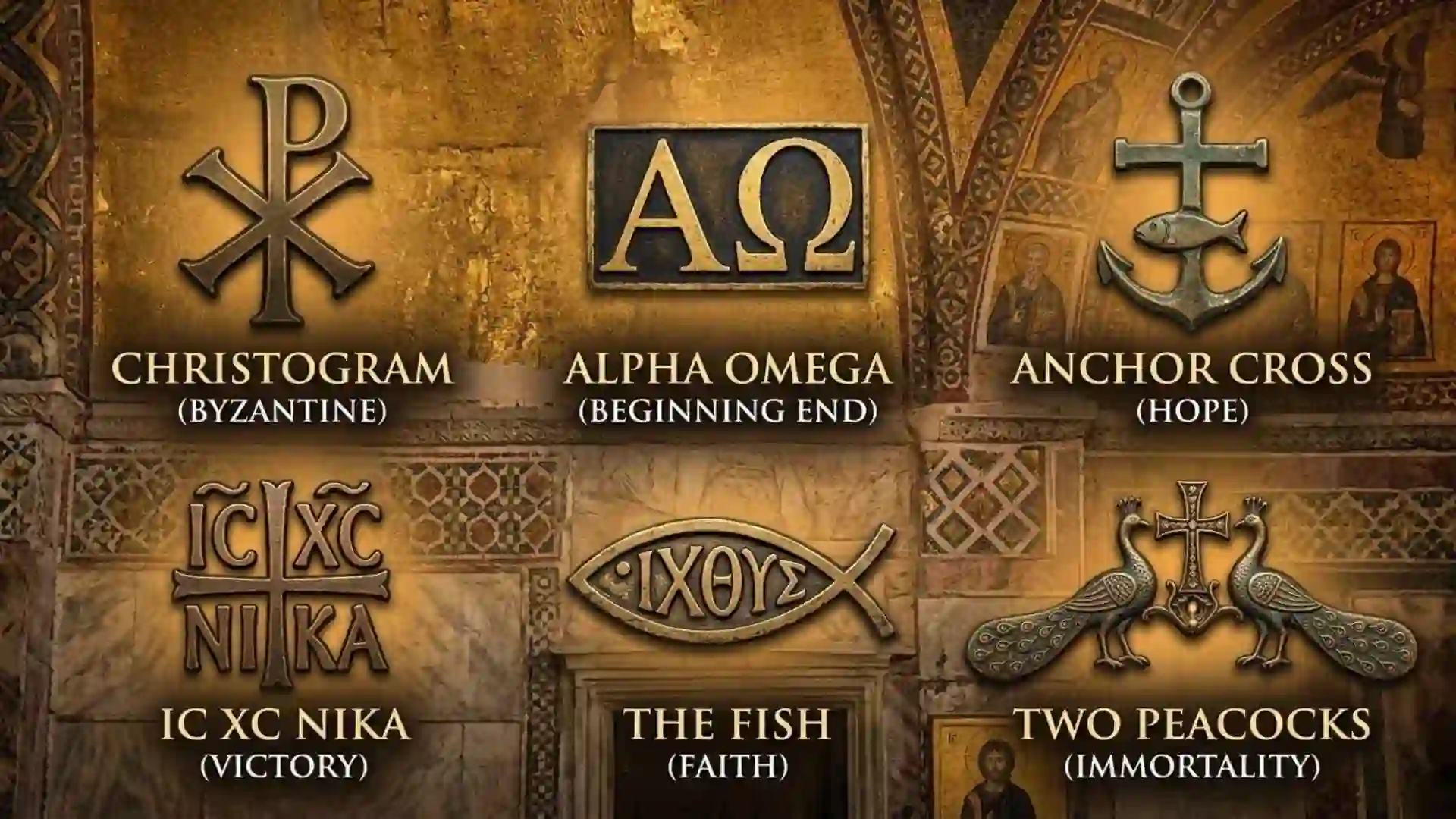
Byzantine symbols are visual signs, religious images, and artistic elements that represented the beliefs, power, identity, and traditions of the Byzantine Empire. From the double-headed eagle and the Chi-Rho to the cross, mosaics, and imperial icons, these symbols appeared in churches, manuscripts, architecture, coins, and royal objects for more than a thousand years.
Byzantine symbols reveal how the Byzantine Empire connected religion, politics, and art into a single visual language.
Each symbol carried layers of meaning, from divine protection and imperial authority to spiritual devotion and cultural identity.
Today, people encounter Byzantine symbols in historical museums, Orthodox Christian art, architecture, jewelry, tattoos, religious objects, and modern designs inspired by medieval aesthetics. Understanding these symbols provides insight into one of history’s most influential civilizations.
Quick Meaning of Byzantine Symbols
Byzantine symbols are artistic and religious representations developed in the Byzantine Empire (330–1453 CE). They expressed Christian faith, imperial authority, heavenly protection, and cultural identity. Common examples include the cross, Christ Pantocrator, the double-headed eagle, the Chi-Rho, and gold mosaics used in churches and sacred art.
Byzantine Symbols Overview Table
| Symbol Name | Primary Meaning | Category | Origin | Civilization or Culture | First Known Use | Common Usage |
| Byzantine Cross | Faith, salvation, Christianity | Religious | Early Byzantine period | Byzantine Empire | 4th century CE | Churches, icons, jewelry |
| Chi-Rho (☧) | Christ and victory | Christian Symbol | Roman Christian era | Byzantine Christianity | 4th century CE | Manuscripts, military banners |
| Double-Headed Eagle | Imperial power and unity | Political Symbol | Late Byzantine era | Byzantine Empire | Around 13th century CE | Flags, royal emblems |
| Christ Pantocrator | Christ as ruler of all creation | Religious Art | Byzantine icon tradition | Eastern Christianity | Early medieval period | Church domes and icons |
| Virgin Mary Theotokos | Mother of God, protection | Religious Symbol | Early Christian tradition | Byzantine Church | 5th century CE | Icons and mosaics |
| Greek Cross | Balance and Christian faith | Religious Symbol | Early Christianity | Byzantine culture | Ancient Christian period | Architecture and art |
| Gold Mosaic | Divine light and heavenly realm | Artistic Symbol | Byzantine art | Byzantine Empire | 4th century CE | Churches and basilicas |
| Halo | Holiness and spiritual enlightenment | Religious Symbol | Christian art tradition | Byzantine Christianity | Early Christian period | Icons and paintings |
What Do Byzantine Symbols Mean?
Byzantine symbols represent the close relationship between faith, authority, and daily life in the Byzantine Empire. Unlike simple decorative images, these symbols were designed to communicate religious teachings and political messages.
The Byzantine worldview considered art a bridge between the earthly world and the divine realm. A symbol in a church, palace, or manuscript was not only beautiful but also carried spiritual and cultural meaning.
For example:
- The cross represented the sacrifice and resurrection of Jesus Christ.
- The eagle represented imperial strength and authority.
- Gold backgrounds represented heavenly light and the eternal nature of God.
- Icons served as windows through which believers could connect with sacred figures.
Byzantine symbols were especially important because many people could not read written texts. Visual imagery helped communicate religious stories, beliefs, and historical identity.
History and Origin of Byzantine Symbols
Byzantine symbols developed from a combination of Roman traditions, early Christian imagery, Greek philosophy, and Eastern Mediterranean cultures.
The Byzantine Empire began when Emperor Constantine the Great moved the Roman capital to Byzantium, which became Constantinople, in 330 CE. Over time, the empire developed a unique identity centered around Eastern Christianity, Greek language, and imperial traditions.
Early Christian Influences
Before Christianity became the official religion of the Roman Empire, Christians often used hidden symbols because of persecution. Early examples included:
- The fish symbol (Ichthys)
- The anchor
- The shepherd image
- The Chi-Rho
After Constantine legalized Christianity in the 4th century, Christian symbols became public and appeared in churches, military objects, and imperial art.
Development During the Byzantine Empire
As Byzantine culture expanded, symbols became more formal and meaningful. Churches were decorated with:
- Mosaics
- Frescoes
- Icons
- Religious architecture
- Imperial imagery
The famous Byzantine style used gold, symmetry, and spiritual imagery to create a sense of divine presence.
The Role of Icons
Icons became one of the most important forms of Byzantine symbolism. These sacred images were not considered ordinary paintings. Orthodox Christians viewed icons as spiritual representations that helped believers focus on prayer and devotion.
The Byzantine Iconoclasm controversy (8th–9th centuries) showed how powerful symbols had become. Some Byzantine rulers opposed religious images, while others defended them as essential parts of Christian worship.
Symbolism and Interpretation of Byzantine Symbols
Byzantine symbols often contained multiple layers of meaning. A single image could represent religious beliefs, political power, and philosophical ideas at the same time.
Traditional Meanings
Traditional Byzantine symbolism focused heavily on Christianity.
Common meanings included:
- Divine protection
- Salvation
- Eternal life
- The authority of Christ
- The connection between heaven and earth
- The power of the emperor
Positive Symbolism
Many Byzantine symbols are associated with positive concepts such as:
- Hope
- Faith
- Wisdom
- Peace
- Strength
- Spiritual guidance
- Unity
The cross, for example, represents suffering but also victory over death through Christian belief.
Negative or Controversial Interpretations
Some symbols have gained different meanings over time. The double-headed eagle, for instance, became associated with later empires and political movements beyond Byzantium.
The meaning of a Byzantine symbol often depends on historical context. A symbol used in a medieval church may communicate faith, while the same image used in a political setting may represent authority or heritage.
Psychological Interpretation
From a psychological perspective, Byzantine symbols work through visual association. Human beings naturally connect:
- Light with purity
- Gold with value and eternity
- Crowns with authority
- Circles with completeness
- Vertical forms with spiritual elevation
These visual patterns helped Byzantine artists communicate complex ideas quickly.
Cultural Significance of Byzantine Symbols
Byzantine symbols influenced cultures across Eastern Europe, the Mediterranean, and the Orthodox Christian world.
Greek and Eastern Orthodox Traditions
The strongest continuation of Byzantine symbolism exists in Eastern Orthodox Christianity. Countries such as Greece, Serbia, Bulgaria, Romania, Georgia, and Russia preserved Byzantine artistic traditions.
Orthodox churches today still use:
- Icon paintings
- Gold mosaics
- Christ Pantocrator images
- Virgin Mary icons
- Byzantine crosses
Slavic Cultures
After the Byzantine Empire influenced Slavic peoples through missionaries such as Cyril and Methodius, Byzantine religious art spread throughout Eastern Europe.
Many Slavic Orthodox traditions adopted Byzantine styles in church architecture, religious painting, and ceremonial objects.
Modern Cultural Identity
Modern communities sometimes use Byzantine symbols to express:
- Historical connection
- Religious heritage
- Cultural pride
- Artistic inspiration
However, meanings can vary depending on location and context.
Religious or Spiritual Meaning of Byzantine Symbols
Religion was the central foundation of Byzantine symbolism. Most Byzantine symbols were created to express Christian theology and spiritual ideas.
The Cross
The cross is the most important Christian symbol in Byzantine tradition. It represents:
- The crucifixion of Jesus
- Redemption
- Resurrection
- The triumph of life over death
Christ Pantocrator
Christ Pantocrator means “Christ Almighty” or “Christ Ruler of All.” This image commonly appears inside church domes.
It shows Jesus as:
- Divine ruler
- Judge
- Teacher
- Protector of humanity
The Virgin Mary Theotokos
The title Theotokos means “God-bearer” or “Mother of God.” Byzantine Christians used images of Mary to express:
- Compassion
- Protection
- Intercession
- Motherhood
Gold and Light Symbolism
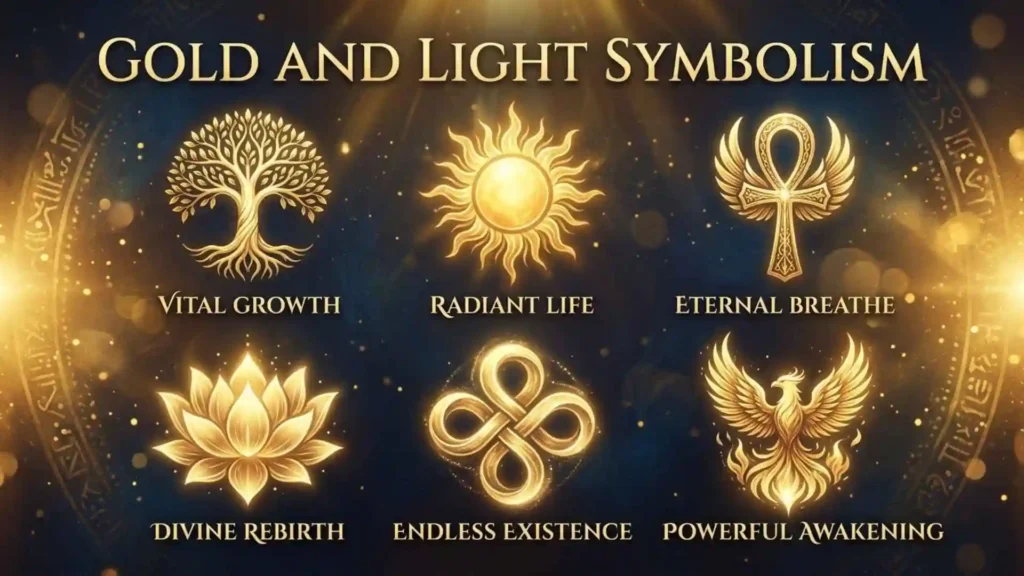
Byzantine churches often used gold backgrounds because gold was associated with:
- Heaven
- Divine glory
- Eternal existence
- Spiritual illumination
Where Byzantine Symbols Are Used
Byzantine symbols appear in many forms of art, religion, and culture.
Churches and Religious Buildings
The most famous examples appear in Byzantine churches such as Hagia Sophia. Its mosaics and architectural features demonstrate the importance of symbolic design.
Manuscripts
Religious books often included:
- Decorative initials
- Cross designs
- Images of saints
- Imperial symbols
Jewelry
Modern jewelry inspired by Byzantine art commonly uses:
- Crosses
- Eagles
- Gold patterns
- Religious motifs
Tattoos
Some people choose Byzantine symbols as tattoos because they represent:
- Faith
- Heritage
- Strength
- Historical connection
Architecture
Byzantine-inspired buildings often include:
- Domes
- Mosaics
- Religious imagery
- Symmetrical designs
Art and Literature
Byzantine symbols influence:
- Medieval art
- Religious paintings
- Historical fiction
- Fantasy designs
Common Variations of Byzantine Symbols
Byzantine symbols changed over centuries and differed by region.
Byzantine Cross Variations
Different crosses include:
- Greek cross
- Latin-style cross
- Orthodox cross
- Decorative jeweled crosses
Eagle Variations
The double-headed eagle appeared in several forms:
- With crowns
- Holding symbols of authority
- With wings spread
- Combined with shields
Icon Styles
Byzantine icons vary depending on:
- Time period
- Artist
- Region
- Religious tradition
Common Misconceptions About Byzantine Symbols
Myth: Byzantine Symbols Were Only Religious
While many Byzantine symbols were religious, some represented imperial power, military authority, and cultural identity.
Myth: Byzantium Was Completely Separate From Rome
The Byzantine Empire considered itself the continuation of the Roman Empire. Many Byzantine traditions developed from Roman foundations.
Myth: All Byzantine Symbols Have One Meaning
Symbols often changed meaning depending on historical period and cultural context.
Myth: Icons Were Just Decorations
Icons had deep religious importance and were used as tools for prayer and devotion.
Interesting Facts About Byzantine Symbols
1. The Byzantine Empire Never Called Itself “Byzantine”
The term “Byzantine” was created by later historians. The people of the empire usually identified themselves as Romans.
2. Gold Was More Than Decoration
Gold backgrounds in Byzantine art symbolized the heavenly realm rather than simply showing wealth.
3. Icons Survived Major Conflicts
Despite wars and destruction, many Byzantine icons survived and continue to influence Christian art.
4. The Double-Headed Eagle Became a Wider Imperial Symbol
Although associated with Byzantium today, later civilizations also adopted the eagle as a symbol of authority.
5. Byzantine Art Influenced Russian Iconography
Russian Orthodox art developed many techniques from Byzantine religious traditions.
6. Symbols Helped Teach Religious Ideas
Visual imagery allowed churches to communicate biblical stories to people regardless of literacy.
7. Byzantine Symbols Appeared on Coins
Emperors used religious and imperial symbols on coins to communicate legitimacy and authority.
8. Mosaics Were a Major Byzantine Innovation
Byzantine artists became famous for creating detailed images using thousands of small colored pieces.
9. Symbols Connected Earth and Heaven
Many Byzantine designs were created to represent a spiritual connection between humans and the divine.
10. Byzantine Symbolism Continues Today
Modern churches, artists, and designers still use Byzantine-inspired imagery.
Related Symbols
| Symbol | Meaning | Difference From Byzantine Symbols |
| Christian Cross | Faith and salvation | Broader Christian symbol used worldwide |
| Ichthys Fish | Early Christianity | Predates many Byzantine designs |
| Roman Eagle | Imperial power | Represents ancient Rome rather than Byzantine Christianity |
| Celtic Cross | Christianity and Celtic heritage | Developed in Western Europe |
| Mandala | Spiritual harmony | Common in Eastern religions, not Byzantine Christianity |
| Halo | Holiness | Used in many religious art traditions |
Frequently Asked Questions
What are the most important Byzantine symbols?
The most important Byzantine symbols include the cross, Christ Pantocrator, the Virgin Mary Theotokos, the Chi-Rho, the double-headed eagle, and gold mosaics. These symbols represented Christianity, imperial authority, spiritual protection, and the connection between the earthly and divine worlds.
What does the Byzantine double-headed eagle symbolize?
The Byzantine double-headed eagle symbolizes imperial authority, unity, and the relationship between earthly and spiritual power. Later cultures adopted similar eagle designs, giving the symbol additional meanings related to heritage and political identity.
Are Byzantine symbols still used today?
Yes. Byzantine symbols remain common in Eastern Orthodox churches, religious artwork, jewelry, architecture, and cultural designs. They continue to represent faith, history, and artistic tradition.
What does Christ Pantocrator mean?
Christ Pantocrator means “Christ Almighty” or “Christ Ruler of All.” It portrays Jesus as a powerful divine figure who governs creation and offers spiritual guidance.
Why did Byzantines use gold in their art?
Byzantines used gold to symbolize heavenly light, eternity, and divine presence. Gold backgrounds helped create the impression that religious scenes existed beyond ordinary time and space.
Are Byzantine symbols only connected to Christianity?
Most Byzantine symbols are strongly connected to Christianity, but some also represent political authority, cultural identity, and artistic traditions of the Byzantine Empire.
What is the difference between Byzantine and Roman symbols?
Roman symbols often focused on imperial power and military identity, while Byzantine symbols combined Roman traditions with Christian theology and Eastern artistic influences.
Can Byzantine symbols be used in modern tattoos?
Yes. Many people use Byzantine symbols in tattoos to represent faith, heritage, history, strength, or personal connection to Byzantine and Orthodox traditions.
Key Takeaways
- Byzantine symbols developed in the Byzantine Empire and combined Roman, Greek, and Christian influences.
- These symbols communicated religious beliefs, imperial authority, and cultural identity.
- The cross, Christ Pantocrator, and double-headed eagle are among the most recognized Byzantine symbols.
- Byzantine art used colors, shapes, and images to express spiritual ideas.
- Many Byzantine symbols continue to influence modern religion, art, architecture, and design.
- Symbol meanings can change depending on historical and cultural context.
Conclusion
Byzantine symbols are more than artistic decorations. They represent a civilization where religion, politics, philosophy, and visual creativity were deeply connected. From sacred icons to imperial emblems, these symbols preserved the beliefs and identity of the Byzantine Empire for centuries.
Today, Byzantine symbols continue to inspire artists, historians, religious communities, and designers around the world. Their lasting influence shows how powerful visual language can be in expressing ideas about faith, authority, and human connection.

I am Amelia Carter, an English language educator and educational writer who enjoys making difficult ideas simple and easy to understand. At LearnNestly, I write about English words, grammar, everyday expressions, and language questions that people often find confusing. I believe learning should feel practical, clear, and enjoyable rather than overwhelming. Through my writing, I try to give readers explanations they can understand and use in real life.
Books:
- The Everyday English Handbook
- Words Made Simple
 Ethan Mitchell
 Daniel Brooks