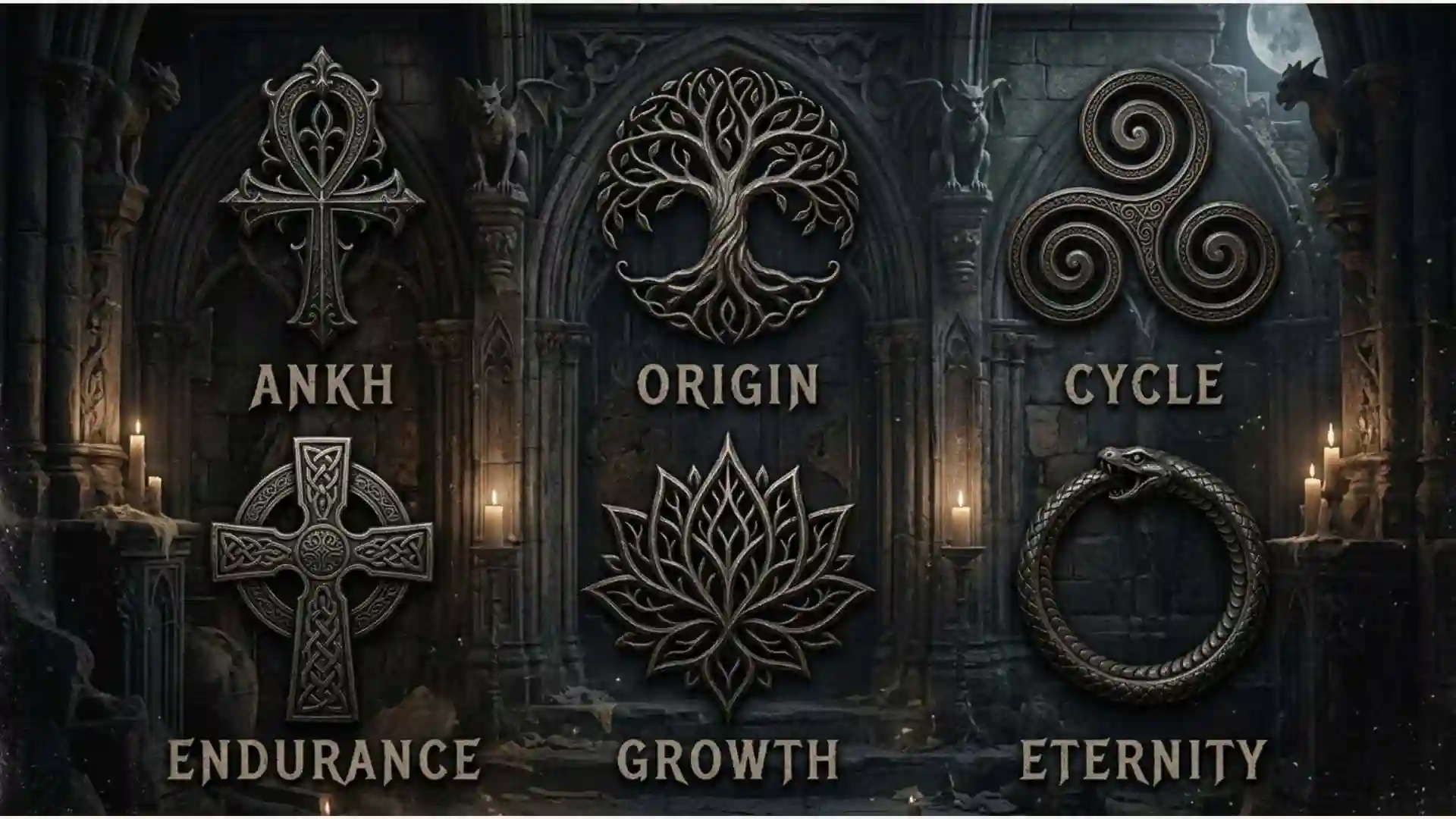
Goth symbols are a simple way to add a dark, mysterious, or alternative style to your text. From crosses, skulls, moons, and stars to occult-inspired signs, hearts, wings, and unusual Unicode characters, these symbols can make usernames, bios, captions, messages, and profiles stand out.
If you are looking for goth symbols to copy and paste, you do not need to create them yourself. This collection brings together more than 150 dark and gothic symbols that you can quickly copy and use on social media, in usernames, gaming profiles, messages, artwork, or personal notes. Each symbol also includes a simple explanation of its common meaning or association.
Gothic symbols can represent different ideas depending on their design and context. A black heart may suggest dark romance, while a moon can represent mystery, night, or transformation. Some symbols have historical, religious, cultural, or modern alternative meanings, so their interpretation can vary. Below, you will find a wide range of dark gothic symbols and their meanings in an easy-to-copy format.
Quick Meaning
Goth copy-and-paste symbols represent themes commonly associated with darkness, mystery, mortality, romance, spirituality, rebellion, and the supernatural. They are digital Unicode characters rather than a single historical alphabet. Users combine crosses, moons, stars, hearts, weapons, ornamental marks, and blackletter-style letters to create a gothic appearance.
Goth Symbols Overview Table
| Field | Details |
| Symbol category | Decorative digital characters |
| Primary meanings | Darkness, mystery, mortality, romance, rebellion |
| Main sources | Unicode, religion, astronomy, medieval art, typography |
| Cultural connection | Modern goth subculture and Gothic aesthetics |
| First known use | Varies by individual symbol |
| Common uses | Usernames, bios, captions, art, tattoos, gaming profiles |
| Digital format | Unicode characters and emoji |
| Common colors | Black, silver, white, crimson, dark purple |
| Popular motifs | Crosses, moons, stars, skulls, bats, hearts, daggers |
| Related styles | Dark academia, emo, punk, occult, Victorian Gothic |
| Main limitation | Appearance varies by font, device, and platform |
Copy and Paste Goth Symbols
The following characters can be copied directly into usernames, profiles, captions, messages, or digital designs.
Popular Goth Symbols
☾ ☽ ☪ ✞ ✟ † ‡ ☦ ♱ ♰
𖤐 𖥔 𖦹 𖣔 𖤓 𖤍
★ ☆ ✦ ✧ ✩ ✮ ✯ ✰
☠︎ ☠ ⚰︎ ⚱︎ 🕯 🦇 🕸
🖤 ♡ ♥︎ ❥ ❣︎ ღ
⚔︎ 🗡 † ⛓︎ ⛧ ⚝
༒ ༺ ༻ ࿇ ࿔ ༶
♱༺𓆩☠︎𓆪༻♱
☾⋆⁺₊✧🕯✧₊⁺⋆☽
𖤐⭒๋࣭ ⭑𖤐
†₊˚.⋆☾⋆⁺₊✧
༺♰༻
𓆩🖤𓆪
☠︎︎༒︎☠︎︎
⛓𓌹*♰*𓌺⛓
⋆༺𓆩☠︎𓆪༻⋆
Gothic Cross Symbols
† ‡ ✝ ✞ ✟ ✠
☦ ☨ ☩ ♱ ♰
𓏶 ༒ ⛧
†† †༺༻†
♱𓆩🖤𓆪♱
✞☾✞
༺✟༻
☠︎†☠︎
⛓♱⛓
𖤐†𖤐
Gothic Moon and Night Symbols
☾ ☽ ☪ ◐ ◑ ◒ ◓
🌑 🌒 🌓 🌔 🌕
🌖 🌗 🌘 🌙
☾⋆。𖦹 °✩
☽༓☾
⋆⁺₊⋆ ☾⋆⁺₊⋆
☾𖤐☽
☽🕯☾
𓆩☾𓆪
☾༺🖤༻☽
Gothic Stars and Celestial Symbols
★ ☆ ✦ ✧ ✩ ✪
✫ ✬ ✭ ✮ ✯ ✰
⋆ ⁂ ⁎ ⁑ ⭒ ⭑
𖤐 𖥔 𖦹 𖣔
⚝ ⛤ ⛥
⋆𖤐⋆
𖤐☾𖤐
✦༺★༻✦
⭒๋࣭ ⭑
⋆。°✩
Gothic Heart Symbols
🖤 ♡ ♥︎ ♥
❥ ❣ ❦ ❧ ღ
𓆩♡𓆪
♱🖤♱
☾♡☽
♡̷̷ˎˊ˗
༺♥༻
🖤⛓🖤
†♡†
𖤐🖤𖤐
Skull, Death, and Mourning Symbols
☠ ☠︎ ⚰ ⚰︎ ⚱
💀 🪦 🕯 🥀
†☠︎†
༒☠︎༒
☠︎𓆩🖤𓆪☠︎
⚰︎🥀⚰︎
🕯☾🕯
𖤐☠︎𖤐
♱⚱︎♱
☠︎⛓☠︎
Gothic Weapon and Chain Symbols
⚔ ⚔︎ 🗡 🗡️
⛓ ⛓️ 🔗
➶ ➷ ➸
†⛓†
⚔︎𖤐⚔︎
⛓𓆩🖤𓆪⛓
༺🗡༻
☾⚔☽
♱⛓♱
🗡†🗡
Bats, Spiders, and Dark Nature Symbols
🦇 🕷 🕸 🐦⬛
🥀 🌹 🍂 🍁
𓆩🦇𓆪
🕸☾🕸
༺🥀༻
🦇𖤐🦇
☠︎🥀☠︎
☾🐦⬛☽
🕷🖤🕷
⛓🥀⛓
Gothic Decorative Borders
༺═────────────═༻
†━━━━━†━━━━━†
𖤐────────𖤐
☾⋆⁺₊────────₊⁺⋆☽
┏━━━━━━━━━━━━┓
┗━━━━━━━━━━━━┛
╔══ஓ๑♡๑ஓ══╗
༒︎──────────༒︎
♱༺────────༻♱
⛓━━━━🖤━━━━⛓
Short Goth Symbol Combinations
☾🖤
†🥀
𖤐☠︎
♱🕯
🦇☾
⛓🖤
☠︎༒
🕸𖤐
⚔︎☾
🖤†
☽🥀
♱⚰︎
𖤐🦇
🕯☠︎
⛧☾
What Do Goth Symbols Mean?
Goth symbols communicate a visual mood rather than one fixed message. Their meanings usually involve darkness, beauty, emotional depth, impermanence, mystery, spirituality, or resistance to conventional expectations.
The modern goth aesthetic often combines seemingly opposite ideas. Black hearts connect love with sadness. Roses appear beside skulls to place beauty next to death. Candles represent both fading life and spiritual illumination. Moons suggest darkness but also guidance within darkness.
This contrast is central to Gothic expression. Gothic art and literature frequently explore boundaries between attraction and fear, life and death, sacred and forbidden, beauty and decay, or reason and the supernatural.
In digital communication, these symbols also act as identity markers. A user who places ☾, †, 🖤, or 𖤐 around a name may be signaling an interest in goth music, dark fashion, horror, alternative culture, or simply a dramatic visual style.
History and Origin of Goth Symbols
Goth symbols have no single origin. Modern collections bring together characters created in different eras for different purposes.
The word “Gothic” originally referred to the Goths, a group of Germanic peoples. Centuries later, Renaissance writers used “Gothic” as a label for medieval architecture they considered different from Classical Greek and Roman design. The term eventually became associated with pointed arches, elaborate churches, gargoyles, stained glass, ruins, and dramatic religious imagery.
During the late 18th and 19th centuries, Gothic literature transformed the term again. Novels and stories centered on castles, secrets, supernatural events, psychological fear, death, forbidden knowledge, and tragic romance. These themes shaped later horror films, Victorian-inspired fashion, and dark visual art.
Modern goth culture developed from the British post-punk music scene around the late 1970s and early 1980s. Gothic rock emphasized atmospheric sound, introspective lyrics, dark clothing, theatrical makeup, and imagery influenced by Romanticism, horror cinema, punk, and earlier Gothic traditions.
Digital goth symbols appeared much later. They became widely usable through Unicode, the international character-encoding standard that allows compatible text characters to appear across computers, phones, websites, and operating systems. Unicode includes stars, crosses, astronomical signs, ornamental punctuation, blackletter mathematical letters, and many other characters now reused in gothic designs.
Symbolism and Interpretation
Darkness and Mystery
Black shapes, moons, ravens, bats, and shadow-like ornaments suggest secrecy, night, uncertainty, and the unknown. Darkness does not always represent evil. It may symbolize privacy, contemplation, hidden knowledge, emotional depth, or freedom from public expectations.
Mortality and Impermanence
Skulls, graves, coffins, candles, and wilted roses remind viewers that life ends. This idea resembles the historical memento mori tradition, in which images of death encouraged people to reflect on time, morality, and the temporary nature of earthly life.
Tragic or Eternal Love
Black hearts, roses, chains, and paired crosses often represent love shaped by longing, grief, loyalty, or separation. In Gothic storytelling, love is frequently powerful but difficult, forbidden, supernatural, or threatened by death.
Rebellion and Individuality
Goth symbols can communicate independence from mainstream fashion and social standards. Their unconventional appearance helps users create an identity that feels private, artistic, theatrical, or deliberately outside ordinary trends.
Spirituality and the Supernatural
Crosses, pentagrams, moons, stars, candles, and celestial signs may express religious belief, occult interest, spiritual exploration, or simple aesthetic preference. The surrounding context determines the intended meaning.
Psychological Interpretation
Dark symbolism often gives visual form to emotions that are difficult to express directly. A broken heart beside a moon may communicate loneliness. A candle near a skull may suggest hope during grief. Chains can represent emotional restriction, while a dagger may symbolize betrayal, protection, or inner conflict.
These interpretations are personal rather than universal psychological rules.
Cultural Significance
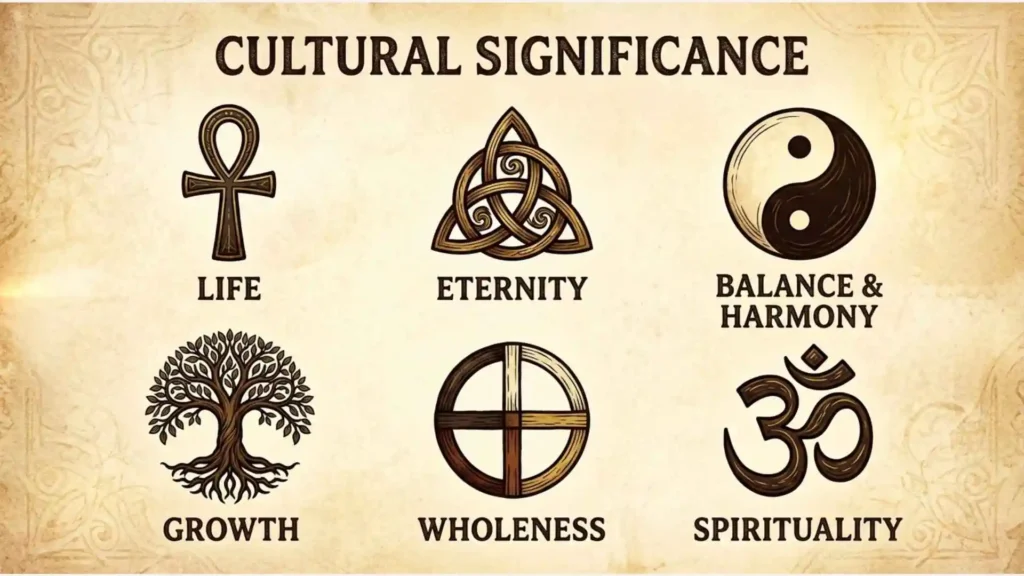
Modern goth symbolism draws from several cultural traditions without belonging exclusively to any one of them.
In European visual culture, Gothic architecture and Christian art contributed crosses, cathedral forms, angels, demons, graves, and elaborate ornament. Victorian mourning culture added black clothing, memorial jewelry, veils, flowers, and sentimental images of death.
Romantic literature introduced ruined castles, moonlit landscapes, tragic heroes, supernatural encounters, and fascination with intense emotion. Horror cinema added bats, vampires, spiderwebs, coffins, ravens, and haunted-house imagery.
Punk and post-punk culture contributed distressed typography, safety pins, chains, stark makeup, and anti-establishment visual language. Contemporary internet culture then compressed these influences into usernames, decorative borders, emojis, and short profile designs.
Meanings also vary by region and community. A cross may primarily communicate faith in one setting and alternative fashion in another. A skull may represent danger, remembrance, celebration, piracy, military identity, or mortality depending on cultural context.
Religious and Spiritual Meaning
Many popular goth characters have religious or spiritual histories, but their appearance in a gothic username does not automatically indicate belief.
The Christian cross represents the crucifixion of Jesus Christ and, within Christianity, sacrifice, salvation, suffering, resurrection, and faith. Different cross designs belong to distinct churches and historical traditions. The Latin cross, Orthodox cross, and cross of Lorraine should not be treated as interchangeable decorations when used in religious contexts.
The pentagram has also carried several meanings. In different historical and modern traditions, an upright five-pointed star may represent protection, balance, humanity, or the elements. An inverted pentagram can have different ceremonial, religious, or countercultural associations. It should not automatically be labeled evil without context.
Crescent moons and stars occur in astronomy, national emblems, decorative art, and multiple religious or spiritual traditions. A crescent used in a goth bio may simply represent nighttime, dreams, femininity, mystery, or change.
Candles often represent prayer, remembrance, guidance, hope, life, or a connection between the material and spiritual worlds.
Digital and Technical Meaning
Most copy-and-paste goth symbols are Unicode characters. Unicode assigns a unique code point to each encoded character so that text can be stored and exchanged across digital systems.
For example:
| Symbol | Unicode Name | Code Point |
| ☾ | Last Quarter Moon | U+263E |
| ☽ | First Quarter Moon | U+263D |
| ★ | Black Star | U+2605 |
| ☆ | White Star | U+2606 |
| † | Dagger | U+2020 |
| ‡ | Double Dagger | U+2021 |
| ☠ | Skull and Crossbones | U+2620 |
| ☦ | Orthodox Cross | U+2626 |
| ♥ | Black Heart Suit | U+2665 |
| ⚔ | Crossed Swords | U+2694 |
Unicode’s Miscellaneous Symbols block includes astronomical, religious, warning, musical, and other established characters. Its ornamental blocks contain decorative marks, including shapes inherited from older symbol fonts such as Wingdings and Webdings.
A symbol may look different across devices because every platform uses its own font or emoji artwork. Some complex combinations can also break when a username field rejects unsupported characters.
Where Goth Symbols Are Used
Social Media Profiles
Users place gothic symbols around display names, biographies, captions, hashtags, and highlight titles on platforms such as Instagram, TikTok, X, Discord, and Tumblr.
Gaming Usernames
Crosses, stars, moons, and dagger symbols help create memorable names for horror, fantasy, role-playing, or competitive gaming profiles.
Music and Fashion
Gothic bands, clothing labels, club flyers, album artwork, jewelry, and makeup packaging often use blackletter typography, crosses, roses, bats, cathedral forms, or celestial imagery.
Tattoos and Jewelry
Skulls, crosses, ravens, moons, roses, swords, and candles appear frequently in body art and accessories. Their permanent use requires more careful cultural and religious consideration than casual digital decoration.
Literature and Visual Art
Gothic fiction, poetry, book covers, illustrations, films, and theatrical designs use these motifs to suggest suspense, grief, supernatural forces, forbidden spaces, or emotional conflict.
Common Variations
Blackletter Text
Blackletter, also called Gothic script or Fraktur in some contexts, uses dense, angular letterforms associated with medieval manuscript traditions and later European printing. Unicode includes mathematical blackletter characters, but they are not intended to replace normal letters in every context.
Examples:
𝔊𝔬𝔱𝔥
𝕲𝖔𝖙𝖍
𝔇𝔞𝔯𝔨
𝕹𝖎𝖌𝖍𝖙
𝔈𝔱𝔢𝔯𝔫𝔞𝔩
Minimal Goth Style
Minimal designs use one or two symbols:
☾
†
𖤐
🖤
♱
☠︎
Romantic Goth Style
Romantic combinations emphasize roses, hearts, moons, and ornate borders:
☾🥀🖤
༺♡༻
♱𓆩♥𓆪♱
🕯☽🥀☾🕯
Occult-Inspired Style
These combinations use stars, celestial shapes, candles, and ritual-looking arrangements:
𖤐☾𖤐
⛧🕯⛧
☽༓☾
𖤐⭒๋࣭ ⭑
Their use does not necessarily indicate occult practice.
Common Misconceptions
Every Goth Symbol Is Satanic
This is false. Goth imagery comes from religion, medieval art, mourning customs, literature, music, fashion, astronomy, horror, and digital design. Many goths do not follow occult or Satanic beliefs.
Goth and Gothic Mean Exactly the Same Thing
“Gothic” can describe medieval architecture, a literary tradition, typography, visual art, or a broad dark aesthetic. “Goth” more often refers to the modern music-based subculture and people connected to it.
All Crosses Have the Same Meaning
Cross designs can represent different Christian traditions, historical groups, memorial customs, typographic marks, or decorative styles. Their specific forms matter.
Every Strange Character Is an Ancient Rune
Many characters shared online as “runes” are modern Unicode symbols, mathematical marks, decorative punctuation, or letters from living and historical writing systems. Their visual appearance alone does not prove an ancient magical origin.
Copy-and-Paste Fonts Are Actual Fonts
Many “fancy fonts” are not font changes. They replace ordinary letters with separate Unicode characters, such as mathematical blackletter letters. This can affect accessibility, search, pronunciation tools, and platform compatibility.
Interesting Facts About Goth Symbols
- The dagger is also a punctuation mark.
The symbol † can mark footnotes, dates of death, or secondary references in publishing. Its gothic appearance comes from its shape, not from an exclusively dark origin. - The black heart began as a card-suit character.
The text symbol ♥ is officially named “Black Heart Suit,” although people now use it broadly for love, emotion, fashion, and decoration. - Blackletter characters are separate Unicode letters.
Text such as 𝔊𝔬𝔱𝔥 may not behave like ordinary Latin text because each decorative letter has its own code point. - Many ornamental symbols came from legacy fonts.
Some Unicode ornamental characters were encoded partly to preserve compatibility with Wingdings, Webdings, and similar symbol fonts. - The moon symbols have astronomical names.
☽ and ☾ are officially called First Quarter Moon and Last Quarter Moon, even though users often treat them as generic crescents. - Goth culture is rooted primarily in music.
Clothing and symbols are highly visible, but the historical subculture formed around post-punk and gothic rock scenes. - A symbol can switch between text and emoji styles.
Some characters appear as simple monochrome marks on one platform and colorful emoji on another. - Skulls are not universally negative.
Across different cultures, skull imagery can express remembrance, ancestry, courage, equality in death, celebration, danger, or mortality. - Victorian mourning influenced modern gothic fashion.
Black clothing, veils, memorial jewelry, flowers, and elaborate expressions of grief helped shape later dark romantic aesthetics. - Accessibility tools may struggle with decorative text.
Screen readers can pronounce blackletter characters individually or incorrectly, making heavily styled profiles harder to understand.
Related Symbols
| Related symbol style | Connection | Main difference |
| Emo symbols | Shares hearts, sadness, and dark styling | More closely tied to emo music and emotional expression |
| Punk symbols | Uses chains, distressed marks, and rebellion | Usually rougher and more political or anti-establishment |
| Occult symbols | Uses ritual, planetary, and esoteric imagery | May belong to specific spiritual or magical systems |
| Dark academia symbols | Uses candles, books, stars, and classical motifs | Focuses more on study, literature, and old institutions |
| Victorian symbols | Uses mourning flowers, cameos, and ornate borders | Connected more directly to 19th-century fashion |
| Horror symbols | Uses blood, monsters, knives, and graves | Designed mainly to create fear or suspense |
| Celestial symbols | Uses moons, planets, suns, and stars | Focuses on astronomy, astrology, or cosmic themes |
Frequently Asked Questions
What are the best copy and paste symbols goth users choose?
The most popular choices include ☾, ☽, †, ♱, 𖤐, ★, 🖤, ☠︎, 🦇, 🕸, 🕯, 🥀, ⚔︎, and ⛓. The best symbol depends on the intended mood. Moons feel mysterious, crosses appear solemn, roses suggest tragic beauty, and chains create a harsher industrial appearance.
How do I copy and paste goth symbols?
Highlight the desired character, copy it, and paste it into a supported text field. On a phone, press and hold the symbol before selecting Copy. Some platforms limit special characters in usernames, so test the design before relying on it for an account name.
Are gothic symbols safe to use in usernames?
Most ordinary Unicode symbols are safe, but a platform may reject certain characters or limit username length. Decorative text can also make a name harder to search, type, remember, or read with accessibility software. A simple combination usually works better than a long string of unusual characters.
What do the moon and cross mean together?
A moon and cross combination has no universal historical definition. It may represent faith during darkness, spiritual mystery, night, mortality, or a blend of religious and gothic aesthetics. The meaning depends on the creator, so viewers should avoid assuming a specific belief without supporting context.
Is 𖤐 a satanic symbol?
Not automatically. Online users often treat 𖤐 as a dark decorative star. Its meaning depends on placement, community, and accompanying imagery. A star-like character in a profile may indicate goth style, alternative fashion, spirituality, or simple visual preference rather than membership in any religion.
Why do some goth symbols appear as boxes?
A box or empty rectangle usually means the device, browser, application, or selected font cannot display that Unicode character. Updating the operating system, switching fonts, or choosing a more widely supported symbol may solve the problem. Newer and uncommon characters tend to have less consistent support.
Can goth symbols be used in tattoos?
They can, but their exact form and background should be researched first. Religious crosses, historical emblems, runes, and occult signs may carry meanings beyond their appearance. Confirm the design, orientation, spelling, and cultural context before turning a digital character into permanent body art.
Are gothic fonts the same as Unicode symbols?
No. A font changes how the same underlying text appears, while Unicode-style text often replaces normal letters with distinct characters. For example, “Goth” and “𝔊𝔬𝔱𝔥” are technically different character sequences. The decorative version may not work properly in searches, forms, passwords, or screen readers.
Do goth symbols belong only to goth culture?
No. Most symbols existed before the modern goth subculture and continue to appear in religion, astronomy, publishing, heraldry, folklore, memorial art, gaming, and fashion. Goth culture combines and reinterprets them through dark music, clothing, literature, performance, and personal expression.
Key Takeaways
- Goth symbols express darkness, mystery, mortality, romance, spirituality, and individuality.
- They do not form one ancient alphabet or universal symbolic system.
- Popular choices include moons, crosses, stars, hearts, skulls, candles, bats, roses, chains, and daggers.
- Most copyable symbols are Unicode characters rather than downloadable fonts.
- Meanings change according to culture, history, religion, and personal intent.
- A religious or historical symbol should not be interpreted only by its gothic appearance.
- Decorative characters may display differently across devices and platforms.
- Simple symbol combinations are usually more readable and accessible.
- Goth culture emerged from a late-1970s and early-1980s music scene, although its imagery draws from much older traditions.
- Users should research symbols carefully before placing them in tattoos, logos, or permanent designs.
Conclusion
Copy and paste symbols goth designs transform ordinary text into a dark, expressive visual identity. A moon can evoke mystery, a candle can represent fragile hope, a skull can encourage reflection on mortality, and a black heart can unite love with melancholy.
These characters are most meaningful when their histories and contexts are understood. They come from different religions, artistic traditions, technical systems, and cultural periods rather than one fixed gothic language. By choosing symbols thoughtfully, you can create usernames, captions, bios, artwork, and designs that feel distinctive without misrepresenting their deeper meanings.

I am Amelia Carter, an English language educator and educational writer who enjoys making difficult ideas simple and easy to understand. At LearnNestly, I write about English words, grammar, everyday expressions, and language questions that people often find confusing. I believe learning should feel practical, clear, and enjoyable rather than overwhelming. Through my writing, I try to give readers explanations they can understand and use in real life.
Books:
- The Everyday English Handbook
- Words Made Simple
 Ethan Mitchell
 Daniel Brooks