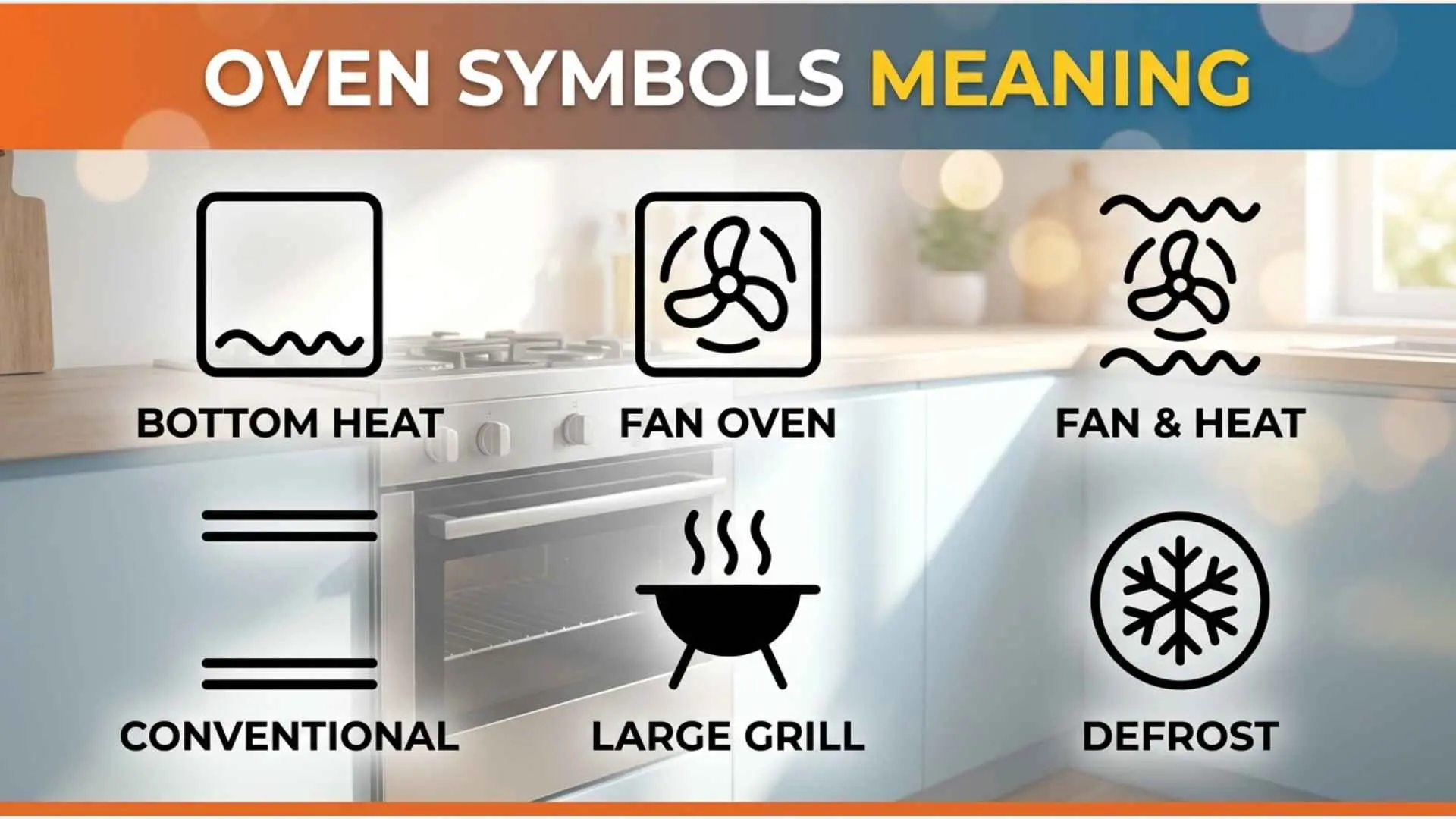
Understanding oven symbols can make cooking much easier, especially when your oven has several unfamiliar icons. Symbols for fan cooking, conventional heating, grilling, defrosting, and other functions can look confusing at first. Knowing what each symbol means helps you choose the right setting and avoid common cooking mistakes.
Different ovens may use slightly different icons, but many symbols are based on the same basic functions. A fan symbol often relates to circulating hot air, while lines at the top or bottom can indicate which heating elements are working. Other symbols may represent the grill, pizza setting, defrost function, rapid heating, or a self-cleaning feature.
In this guide, we explain the most common oven symbols and their meanings in simple language. You’ll learn what each icon does, when to use it, and which oven setting is suitable for different types of food. Whether you have a new oven or simply want to understand the symbols on your current one, this guide will help you cook with greater confidence.
Quick Meaning
Oven symbols show which heating elements and features are active. Horizontal lines represent upper or lower heat, a fan indicates air circulation, and a zigzag line usually means grilling. Other icons control defrosting, lighting, cleaning, timers, temperature probes, and special programs. Always check your appliance manual because symbols can differ slightly between manufacturers.
Oven Symbols Overview Table
| Oven Symbol or Icon | Primary Meaning | Best Used For | Important Note |
| Two horizontal lines | Conventional oven | Cakes, casseroles, traditional baking | Uses top and bottom heat |
| Fan inside a circle | Convection or fan oven | Roasting, cookies, multiple trays | Often cooks faster |
| Fan without a circle | Fan-assisted cooking | General baking and roasting | Meaning varies by brand |
| Single bottom line | Bottom heat | Pizza bases, pies, crisping | Little or no top heat |
| Single top line | Top heat | Browning and finishing | Can burn food quickly |
| Zigzag top line | Full grill | Toast, meat, browning | Keep food near upper element |
| Short zigzag line | Half or center grill | Small portions | Uses less grill area |
| Fan with zigzag line | Fan grill | Meat, poultry, thick foods | Circulates grill heat |
| Snowflake and drop | Defrost | Frozen food | Usually no active heat |
| Light bulb | Oven light | Viewing food | Does not normally heat |
| Plate with heat waves | Keep warm | Holding cooked meals | Not intended for cooking raw food |
| Pizza slice or fan with bottom line | Pizza setting | Pizza, flatbreads, crisp pastry | Strong bottom heat |
| Water drop or steam lines | Steam function | Bread, vegetables, reheating | Available only on certain ovens |
| “P” or high-heat cleaning icon | Pyrolytic cleaning | Burning off grease | Oven becomes extremely hot |
| Water drop with sparkle | Steam cleaning | Loosening light residue | Requires water in many models |
| Clock | Timer or cooking duration | Timed cooking | May not control heat on all models |
| Lock or key | Child lock/control lock | Preventing accidental use | Unlock method varies |
| Probe or thermometer | Food temperature probe | Meat and poultry | Requires compatible probe |
What Do Oven Symbols Mean?
Oven symbols communicate how heat moves inside the cooking cavity. Instead of using long written labels, manufacturers use simple icons that can be understood in many countries.
The most important features to recognize are lines, fans, zigzags, circles, and drops:
- A straight horizontal line represents a heating element.
- A fan shows that air moves around the oven.
- A circle around a fan often represents the rear circular heating element.
- A zigzag or toothed line represents the grill.
- A snowflake usually indicates frozen food or defrosting.
- A water drop often relates to steam, moisture, or cleaning.
- A bulb controls the interior light.
Symbols can combine several features. For example, a fan beneath a zigzag line means the grill and fan work together. A fan above a bottom line usually indicates a pizza or intensive-baking mode.
Because manufacturers sometimes assign different functions to similar icons, the control-panel legend or user manual remains the final authority for a specific oven.
History and Origin of Oven Symbols
Modern oven symbols developed as household appliances became more advanced and internationally distributed. Early domestic ovens relied on words such as “bake,” “broil,” and “warm.” As manufacturers began selling appliances across countries with different languages, pictograms became a practical alternative.
The symbols were designed to visually represent real parts of an oven. A line at the top of a square shows that the upper element is heating. A line at the bottom represents lower heat. A fan image reflects the metal fan mounted at the back of many ovens.
This visual system expanded as new features appeared. Convection cooking introduced the fan symbol, while self-cleaning ovens added icons for pyrolytic or steam-cleaning cycles. Microwave combination ovens, steam ovens, and smart appliances now include symbols for rapid preheating, food probes, moisture control, and automated programs.
Unlike ancient religious or cultural symbols, oven icons have no single historical origin or spiritual tradition. They are functional pictograms created for safety, convenience, and international communication.
Common Oven Symbols and Their Meanings
Conventional Oven Symbol
The conventional oven symbol normally looks like a square with one horizontal line at the top and another at the bottom.
It means the upper and lower heating elements operate together without a fan. Heat rises naturally, so the upper part of the oven may become warmer than the lower section.
Conventional cooking works well for:
- Cakes that need gentle, steady heat
- Custards and delicate desserts
- Bread
- Casseroles
- Traditional recipes written for a standard oven
- Single-tray baking
Use the center shelf for the most balanced result. Avoid filling every shelf because natural airflow is less efficient than fan circulation.
Fan Oven or Convection Symbol
A fan inside a circle usually means true convection cooking. The circle represents a heating element positioned around the fan at the rear of the oven.
This mode distributes hot air throughout the cavity. It can produce more even cooking, especially when using several shelves.
It is suitable for:
- Cookies on multiple trays
- Roasted vegetables
- Meat
- Pastries
- Batch baking
- Foods that benefit from crisp surfaces
Fan ovens often cook food faster than conventional ovens. Many recipes require a temperature reduction of about 25°F when converted from conventional to convection cooking, although the correct adjustment depends on the recipe and appliance.
Fan-Assisted Oven Symbol
A fan shown without a circle may indicate fan-assisted cooking. In many ovens, the top and bottom elements create heat while the fan circulates it.
This setting combines traditional heating with improved airflow. It is useful for general roasting and baking, but its meaning varies more between brands than the fan-in-a-circle icon.
Check the manual before assuming that a plain fan symbol includes heat. On some appliances, a fan without heating is used for defrosting.
Bottom Heat Symbol
The bottom heat symbol is a square with one straight line along the bottom.
Only the lower heating element operates, directing heat toward the base of the food. This mode is helpful when the top is already cooked but the base needs more color or firmness.
Use bottom heat for:
- Crisping pizza crust
- Finishing fruit pies
- Browning quiche bases
- Baking dishes in a water bath
- Reheating foods without excessive top browning
- Firming the bottom of pastry
Watch the food carefully because intense lower heat can burn thin crusts.
Top Heat Symbol
The top heat symbol normally contains one straight line along the top of a square.
It activates the upper heating element and is mainly used to finish or brown food rather than cook a large dish from beginning to end.
Good uses include:
- Browning casseroles
- Melting cheese
- Finishing gratins
- Adding color to baked pasta
- Crisping the surface of a dish
Top heat is usually gentler than the grill, but the difference depends on the oven.
Full Grill Symbol
The full grill symbol often appears as a zigzag, toothed, or wavy line across the top of a square.
The grill element creates strong radiant heat from above. It works similarly to broiling in US cooking terminology.
Use it for:
- Toast
- Bacon
- Sausages
- Thin cuts of meat
- Fish fillets
- Melting cheese
- Browning breadcrumbs
Place food on an upper shelf, but leave enough space to prevent burning. Grill with the door closed unless the manufacturer specifically instructs otherwise.
Half Grill or Center Grill Symbol
A short zigzag line at the top usually represents a half-width, economy, or center grill.
Only part of the grill element heats. This setting saves energy when cooking a small portion, such as two slices of toast or one small piece of fish.
Center the food beneath the active section. Placing it at the side may lead to uneven cooking.
Fan Grill Symbol
The fan grill symbol combines a fan with a zigzag line at the top.
The grill provides strong upper heat while the fan circulates hot air around the food. This reduces the need to turn larger items repeatedly and can create an evenly browned exterior.
Fan grilling is useful for:
- Chicken pieces
- Whole poultry
- Thick steaks
- Chops
- Kebabs
- Roasted vegetables
- Large meat joints
It is generally better for thicker foods than a standard grill because circulating heat reaches more than the upper surface.
Pizza Setting Symbol
The pizza symbol may show a pizza slice, a fan with a bottom line, or a fan combined with strong lower heat.
This setting is designed to produce a crisp base while cooking the toppings evenly. The lower element heats the crust, and the fan distributes heat around the food.
It works well for:
- Fresh or frozen pizza
- Flatbreads
- Focaccia
- Open pies
- Tarts
- Foods with moist toppings and a crisp base
Preheating the oven and using a hot baking tray or pizza stone can improve the crust.
Defrost Symbol
The defrost symbol often looks like a snowflake, sometimes combined with a water drop or fan.
In many ovens, the fan circulates room-temperature air without activating the heating elements. This helps frozen food thaw more evenly than leaving it in still air.
Defrost mode is suitable for bread, baked goods, and certain prepared foods. Raw meat, fish, and poultry should be thawed safely according to food-safety guidance, usually in the refrigerator rather than at room temperature.
Oven Light Symbol
A light bulb icon controls the lamp inside the oven.
This setting lets you inspect food without opening the door and losing heat. It may also help when cleaning the interior.
The light setting normally does not activate the heating elements. However, the lamp itself may produce a small amount of warmth.
Keep-Warm Symbol
The keep-warm symbol may look like a plate with rising heat waves, a covered dish, or a low-temperature mark.
It maintains cooked food at a serving temperature without applying the intense heat used for baking or roasting.
Use it for short-term holding of:
- Cooked meat
- Casseroles
- Bread
- Side dishes
- Plates before serving
It should not be used to slowly cook raw meat or hold food indefinitely. Food must remain at a safe temperature.
Plate-Warming Symbol
The plate-warming icon may show stacked plates or a dish with heat lines.
It gently warms serving dishes so hot food does not cool immediately when plated. This function is particularly useful for large meals, dinner parties, and restaurant-style presentation.
Check that the dishes are oven-safe. Thin glass, plastic, or decorated plates may crack, melt, or become damaged.
Rapid Preheat Symbol
Rapid preheating may be represented by arrows, speed lines, a thermometer, or several upward-pointing chevrons.
This mode activates multiple heating elements to bring the oven to the selected temperature quickly. Some models automatically switch to the chosen cooking function once preheating is complete, while others require manual selection.
Do not place delicate food inside during rapid preheat unless the manufacturer allows it. Strong initial heat may affect rising, browning, or texture.
Steam Cooking Symbol
Steam symbols often include water drops, clouds, or rising wavy lines.
A true steam oven uses water vapor to cook food. Combination models may add steam to convection heat, helping bread develop a crisp crust while keeping the inside moist.
Steam functions can be useful for:
- Vegetables
- Fish
- Rice
- Bread
- Reheating leftovers
- Preventing food from drying out
Follow the appliance instructions for filling the water tank or reservoir. Do not pour water directly into the oven unless the manual specifically directs you to do so.
Dough-Proving Symbol
The dough-proving icon may show a loaf, bowl, rising arrows, or a low-temperature fan symbol.
It maintains a warm, controlled environment that encourages yeast dough to rise. This setting is cooler than normal baking temperatures.
Cover the dough to prevent the surface from drying. The exact proving time depends on yeast, dough composition, and room conditions.
Frozen-Food Symbol
A snowflake combined with a fan, tray, or food icon may indicate a special frozen-food program rather than simple defrosting.
This mode is designed to cook foods directly from frozen. It may use strong airflow, bottom heat, or an automatic temperature pattern.
Use it for products such as:
- Frozen fries
- Pizza
- Breaded foods
- Prepared snacks
Do not confuse it with fan-only defrost mode. One cooks frozen food, while the other merely thaws it.
Oven Cleaning Symbols
Pyrolytic Cleaning Symbol
Pyrolytic cleaning may be shown by the letter “P,” a lock with heat waves, dots turning into ash, or sparkling lines.
During this cycle, the oven reaches an extremely high temperature and burns baked-on grease into ash. The door automatically locks for safety.
Before starting:
- Remove trays and accessories unless the manual says they are pyrolytic-safe.
- Wipe away large spills.
- Ventilate the room.
- Keep children and pets away.
- Never try to force the locked door open.
After the oven cools, wipe away the remaining ash with a damp cloth.
Catalytic Cleaning Symbol
Catalytic ovens use specially coated interior panels that absorb and break down grease during normal cooking or a dedicated cleaning cycle.
The symbol may show dots, sparkles, or a textured wall. These panels should not usually be scrubbed with abrasive products because harsh cleaning can damage the coating.
Catalytic cleaning is less intensive than pyrolytic cleaning and may not remove heavy sugar deposits or large spills.
Steam-Cleaning Symbol
A steam-cleaning icon often shows a water drop, tray, or sparkle.
The program uses low heat and moisture to soften light grease and food residue. Depending on the model, you may need to place a small quantity of water in a tray or recessed area.
Steam cleaning is useful for routine maintenance but does not replace deeper cleaning when residue is heavily burned on.
Symbolism and Technical Interpretation
Oven symbols are technical rather than cultural symbols. Their meaning comes from visual resemblance and position.
A top line is placed at the top because it represents the upper element. A bottom line appears at the bottom for the same reason. The fan’s blades suggest motion and circulation. Zigzag lines imitate the shape of exposed or concealed grill elements.
These icons also communicate energy flow. Conventional heat travels mainly through radiation and natural convection. Fan modes add forced convection. Grill functions use strong radiant heat, while steam programs transfer heat through moisture.
The symbols therefore show not only which component is active but also how food is likely to cook.
Where Oven Symbols Are Used
Oven symbols appear on more than standard kitchen ovens. You may encounter them on:
- Electric wall ovens
- Gas ovens with electric controls
- Freestanding ranges
- Countertop ovens
- Toaster ovens
- Combination microwave ovens
- Steam ovens
- Air-fry ovens
- Commercial cooking equipment
- Smart-appliance apps
- Recipe manuals
- Digital control panels
Some appliances use printed icons around a dial. Others show symbols on an electronic screen. Touchscreen ovens may replace permanent icons with animated menus and food-specific programs.
Common Variations Between Oven Brands
The same basic functions may use different designs. One manufacturer may show convection as a fan inside a complete circle, while another uses a fan surrounded by broken arcs.
Common differences include:
Fan Design Variations
Fans may have three, four, or five blades. The number of blades usually has no special meaning. The circle, lines, or additional symbols around the fan provide the important information.
Grill Design Variations
A grill may appear as:
- A zigzag line
- A row of triangles
- A wavy line
- A thick straight line
- A toothed band
A full-width design usually means the entire grill operates. A shorter line often indicates an economy or center grill.
Heat-Line Variations
Some ovens use thick bars, while others use thin lines. A dotted or broken line may represent gentler heat, although this is not universal.
Automatic Program Icons
Modern ovens may display pictures of bread, chicken, fish, cake, pizza, or meat. These symbols normally activate preset combinations of time, temperature, steam, and fan speed.
Regional Language Differences
In the United States, strong overhead heat is commonly called broiling. In the United Kingdom and many other regions, it is called grilling. The symbol can be similar even when the written label differs.
Common Misconceptions About Oven Symbols
Every Fan Symbol Means Convection Heat
A fan does not always mean that a heating element is active. A plain fan may indicate defrosting, cooling, or fan-assisted cooking. Look for a surrounding circle or additional heat lines.
The Grill Is the Same as Top Heat
Both produce heat from above, but the grill usually delivers more intense radiant heat. Top heat is often gentler and better for finishing baked dishes.
Convection Is Best for Every Recipe
Fan cooking is efficient, but it may not suit delicate cakes, soufflés, custards, or recipes that depend on slow, even rising. Conventional heat can be more appropriate.
A Snowflake Always Means Defrost
A snowflake may indicate defrosting, frozen-food cooking, or a special cold-start program. Additional icons reveal the intended mode.
Self-Cleaning Means No Manual Care
Self-cleaning cycles reduce residue, but users still need to remove ash, wipe spills, clean the door edges, and follow maintenance instructions.
Identical Symbols Have Identical Meanings
Most icons follow common conventions, but there is no guarantee that every manufacturer uses them in exactly the same way. The model-specific manual should settle any uncertainty.
Interesting Facts About Oven Symbols
- The icon’s position often mirrors the appliance part. A top line means an upper element because it appears where that element sits inside the oven.
- A circle around the fan is meaningful. It frequently represents the circular heating element surrounding the rear fan, not merely decorative framing.
- Broil and grill usually describe the same basic process. The preferred word changes by region, but both refer to strong overhead heat.
- Fan ovens can cook on several shelves. Moving air reduces hot and cool zones, making batch baking more practical.
- Some fans run after cooking stops. This is usually a cooling fan protecting the electronics, not an active cooking mode.
- Pizza settings are combination functions. They typically balance powerful lower heat with circulating air to cook toppings without leaving a soft base.
- Pyrolytic cleaning locks the door for a reason. The cycle reaches temperatures far above normal cooking levels, so the safety lock prevents accidental opening.
- A bulb icon is more useful than it seems. Checking food through the glass helps preserve temperature because opening the door releases heat.
- Automatic food icons are not universal recipes. A chicken or cake program is calibrated for a particular oven and may still require weight or doneness adjustments.
- Symbol combinations act like short technical sentences. A fan plus a grill line tells you that both air circulation and overhead radiant heat are active.
- Some ovens hide elements behind panels. Even when no glowing element is visible, the corresponding line symbol may show which concealed heat source is operating.
- Smart ovens still use traditional pictograms. Digital interfaces retain familiar fan, line, bulb, and grill images because users recognize them faster than technical labels.
Related Kitchen Appliance Symbols
Microwave Symbol
Microwave cooking is often represented by several horizontal waves. Unlike oven heat, microwaves excite water molecules within food.
Air-Fry Symbol
The air-fry icon may show a fan, basket, fries, or strong circular airflow. It usually uses high-speed convection to create a crisp surface.
Warming Drawer Symbol
A drawer or plate with rising waves indicates low heat for keeping dishes or food warm.
Temperature-Probe Symbol
A pointed probe or thermometer represents internal temperature monitoring. It is mainly used for meat, poultry, and large roasts.
Timer Symbol
A clock or bell controls timing. It may sound an alert, delay the start, or automatically stop cooking, depending on the oven.
Child-Lock Symbol
A key, padlock, or finger with a lock prevents accidental control changes. It may lock only the control panel or both the controls and door.
Frequently Asked Questions
What do the lines on an oven symbol mean?
Straight lines represent heating elements. A line at the top means upper heat, while a bottom line means lower heat. Two lines usually indicate conventional cooking with both elements. Broken, thick, or combined lines may represent specialized functions, so check the manual when the design is unusual.
What is the symbol for a fan oven?
The most common fan-oven symbol is a fan inside a circle. The fan circulates hot air, while the circle often represents a rear heating element. A fan without a circle may have another meaning, such as fan-assisted cooking or defrosting, depending on the appliance.
Which oven symbol should I use for baking?
Use the two-line conventional setting for many cakes, breads, custards, and single-tray recipes. The fan setting is useful for cookies, pastries, and multiple trays. Follow the recipe’s instructions and adjust the temperature when converting between conventional and convection cooking.
Which symbol is best for pizza?
Choose the pizza icon or a symbol showing a fan with a bottom horizontal line. This combination provides strong lower heat for a crisp crust while circulating hot air around the toppings. If your oven has no pizza mode, conventional or convection heat with a preheated baking surface can also work.
What does a zigzag line on an oven mean?
A zigzag, toothed, or wavy line at the top represents the grill or broiler. It provides intense radiant heat from above. Use it for toast, thin meats, melted cheese, and browning. A shorter zigzag often means a half-width or center grill.
What does the snowflake oven symbol mean?
A snowflake usually refers to defrosting or frozen food. When paired with a fan, it may circulate unheated air to thaw food. When combined with heat or a food icon, it may activate a program that cooks food directly from frozen.
What is the difference between a fan oven and fan grill?
A fan oven uses circulating hot air for baking and roasting throughout the cavity. A fan grill combines the fan with intense heat from the upper grill element. Fan grilling is especially useful for poultry, thick meat, and foods that need a browned surface.
What does the oven cleaning symbol look like?
Cleaning symbols vary. Pyrolytic cleaning may appear as “P,” sparkles, ash dots, or a locked oven with heat waves. Steam cleaning often uses a water drop and sparkle. Consult the manual before starting because each cleaning system requires different preparation and safety steps.
Why does my oven fan keep running after I turn it off?
Many ovens have a cooling fan that continues running after cooking. It lowers the temperature around the control panel, door, and electronic components. This is normally expected. Seek service advice if the fan runs unusually long, makes abnormal sounds, or never turns off.
Are oven symbols the same on every appliance?
No. Most brands follow similar visual conventions, but symbols are not completely standardized across every model. A plain fan, snowflake, or water-drop icon can represent different functions. Use the appliance manual or the manufacturer’s control-panel guide for a definitive explanation.
Key Takeaways
- Oven symbols show which heating elements, fans, and special features are active.
- Two horizontal lines usually mean conventional top-and-bottom heat.
- A fan inside a circle commonly represents true convection cooking.
- A zigzag top line means grilling or broiling.
- A single bottom line provides concentrated heat beneath the food.
- Fan-grill mode combines strong upper heat with circulating air.
- Snowflakes can mean defrosting or frozen-food cooking.
- Water-drop icons usually relate to steam or moisture-assisted cleaning.
- Self-cleaning programs require careful preparation and safety precautions.
- Symbol designs differ, so the model-specific manual is always the final reference.
Conclusion
Learning oven symbols meaning turns an unfamiliar control panel into a practical cooking guide. Lines show where heat comes from, fans explain how air moves, and combined icons reveal specialized modes for pizza, grilling, defrosting, warming, and cleaning.
Once you understand these basic patterns, choosing the right setting becomes much easier. You can bake more evenly, crisp food more effectively, protect delicate dishes, and avoid using excessive heat. Because manufacturers sometimes modify their designs, compare any unfamiliar symbol with your oven’s manual before using the function.

I am Amelia Carter, an English language educator and educational writer who enjoys making difficult ideas simple and easy to understand. At LearnNestly, I write about English words, grammar, everyday expressions, and language questions that people often find confusing. I believe learning should feel practical, clear, and enjoyable rather than overwhelming. Through my writing, I try to give readers explanations they can understand and use in real life.
Books:
- The Everyday English Handbook
- Words Made Simple
 Ethan Mitchell