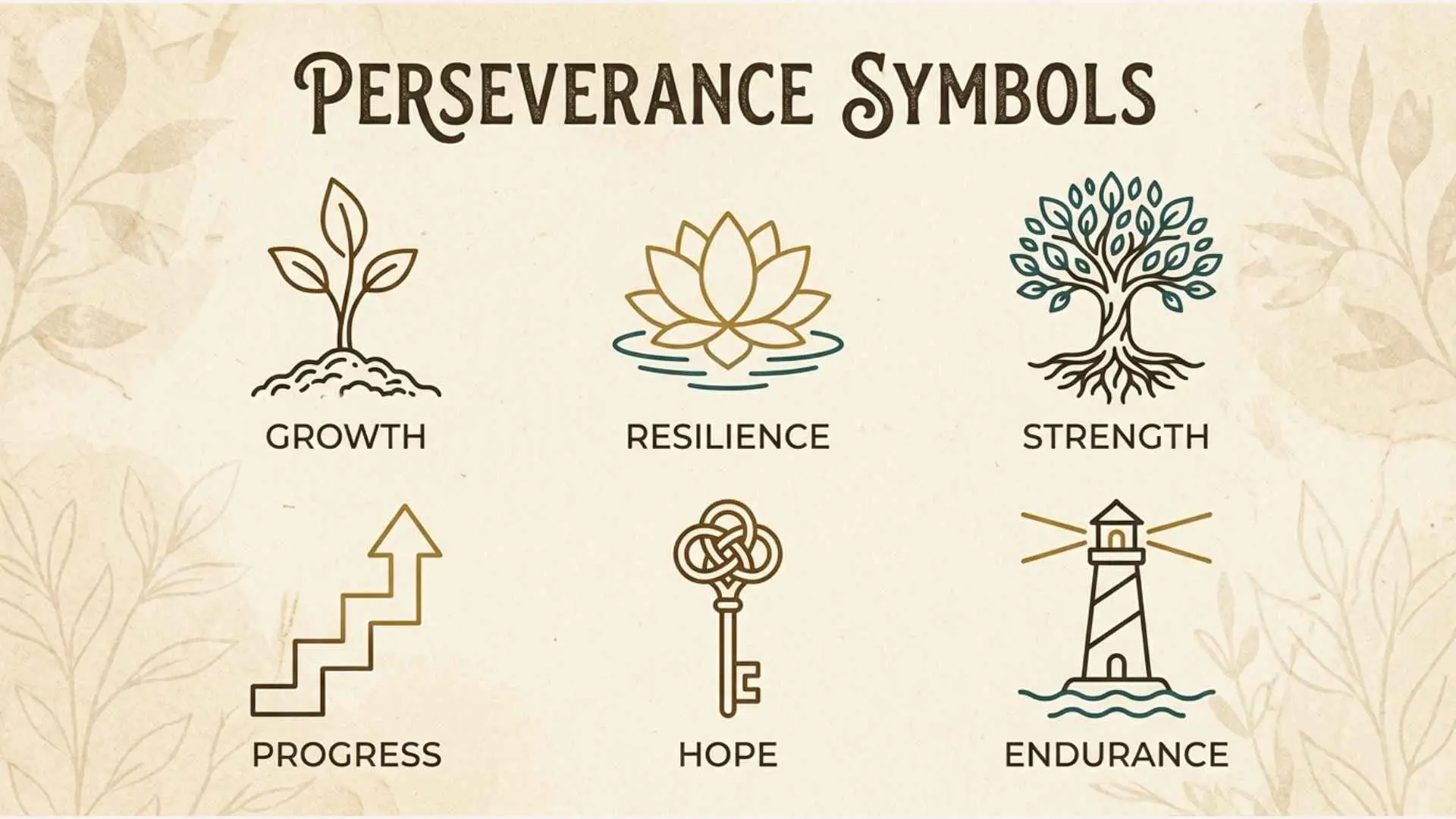
Perseverance symbols represent the strength to keep moving forward when life becomes difficult. From mountains and oak trees to phoenixes and arrows, many symbols have been used across cultures to express endurance, courage, resilience, and determination. Their meanings can vary, but they often share the idea of standing strong through challenges.
People connect with these symbols for many reasons. A mountain can represent the difficult journey toward a goal, while a phoenix can symbolize rising again after hardship. Other signs, such as bamboo, anchors, and tortoises, can reflect patience, stability, persistence, and the ability to survive challenging circumstances.
In this guide, we’ll explore the most powerful symbols of perseverance and explain what each one represents. You’ll discover their cultural meanings, spiritual associations, and common uses in art, tattoos, jewelry, literature, and everyday life, helping you choose a symbol that best reflects strength and endurance.
Quick Meaning of Perseverance Symbols
Perseverance symbols are images, objects, animals, plants, or patterns that represent persistence despite difficulty. Common examples include the lotus for rising above hardship, the phoenix for rebuilding after loss, the oak tree for lasting strength, the mountain for overcoming challenges, and the turtle for steady progress.
Perseverance Symbols Overview Table
| Symbol | Primary Meaning | Cultural or Historical Association | Common Modern Use |
| Lotus flower | Rising above hardship | Buddhism, Hinduism, ancient Egypt | Tattoos, meditation art, jewelry |
| Phoenix | Renewal after destruction | Greek and Roman traditions; related firebirds appear elsewhere | Recovery symbols, literature, logos |
| Oak tree | Endurance and inner strength | European traditions, Celtic culture, classical mythology | Family crests, memorials, artwork |
| Mountain | Challenge, achievement, resilience | Found in many religious and cultural traditions | Tattoos, motivational art, branding |
| Turtle | Patience and steady progress | Indigenous, East Asian, African, and other traditions | Jewelry, educational imagery |
| Bamboo | Flexibility under pressure | Chinese and Japanese art and philosophy | Home décor, tattoos, wellness imagery |
| Anchor | Stability during hardship | Maritime history and Christian symbolism | Tattoos, jewelry, memorial designs |
| Endless knot | Continuity and persistence | Tibetan Buddhism and South Asian traditions | Sacred art, textiles, jewelry |
| Ant | Hard work and persistence | Folklore, fables, religious texts | Educational stories and emblems |
| Salmon | Determination against obstacles | Celtic and Indigenous traditions | Regional art, tattoos, storytelling |
| Koi fish | Effort, ambition, overcoming difficulty | Chinese and Japanese traditions | Tattoos, garden art, paintings |
| Dandelion | Survival and hope | Modern popular symbolism | Tattoos, illustrations, gifts |
What Do Perseverance Symbols Mean?
Perseverance symbols express the decision to keep moving forward when success is delayed or uncertain. They do not usually promise an easy victory. Instead, they acknowledge resistance, pain, time, and repeated effort.
The exact meaning depends on the image. A mountain represents the difficulty of the journey and the effort required to reach a goal. A turtle emphasizes patience rather than speed. Bamboo suggests that flexibility can prevent a person from breaking under pressure. The phoenix represents a more dramatic kind of perseverance: rebuilding life after devastation.
These symbols also reflect an important distinction between perseverance and simple strength. Strength may describe the ability to withstand one difficult moment. Perseverance describes strength sustained over time.
For that reason, people often choose these images during recovery, grief, education, athletic training, career changes, illness, personal growth, or other long struggles. A perseverance symbol can serve as a private reminder that slow progress still counts.
History and Origin of Perseverance Symbols
There is no single historical symbol from which all perseverance imagery developed. Human societies created different representations of endurance by observing nature, survival, labor, spiritual discipline, and heroic struggle.
Nature as the earliest source
Many ancient symbolic ideas came from natural cycles. Plants returned after winter, seeds pushed through soil, rivers cut through stone, and animals migrated across difficult terrain. These observations gave people visible models of persistence.
The lotus became especially important because it grows from muddy water yet produces a clean, striking flower above the surface. In South Asian religious traditions, this natural process came to represent spiritual purity, awakening, and freedom from attachment.
Trees also became enduring symbols because they survive storms, seasonal change, and long periods of growth. Oaks, in particular, gained associations with power and longevity in several European cultures.
Mythological development
Myths transformed perseverance into memorable stories. The phoenix, best known through Greek and Roman literary traditions, became associated with death, renewal, and cyclical return. Although accounts differ, later interpretations strongly linked the bird with recovery after destruction.
Mythological heroes also embodied perseverance by completing dangerous journeys, enduring exile, resisting temptation, or continuing after defeat. These stories helped cultures turn an abstract virtue into a dramatic narrative.
Religious and philosophical development
Religious traditions often presented perseverance as faithfulness, patience, discipline, or steadfastness. Buddhist teachings emphasized sustained practice on the path toward awakening. Christianity praised endurance in faith during suffering and persecution. Hindu traditions connected disciplined action and spiritual persistence with duty and liberation.
Philosophical traditions also explored the virtue. Stoic thinkers, for example, taught that people should focus on their choices and responses rather than events beyond their control. Modern resilience language often echoes this idea, although resilience and perseverance are not identical.
Modern evolution
Today, perseverance symbolism is highly personal and cross-cultural. People combine older motifs with modern experiences, such as mental recovery, academic pressure, athletic goals, disability advocacy, entrepreneurship, or rebuilding after loss.
A lotus tattoo may be religious for one person, psychological for another, and purely aesthetic for someone else. Context determines whether a symbol retains its traditional meaning or receives a new personal interpretation.
Symbolism and Interpretation
Traditional meaning
Traditionally, perseverance was often linked with survival, duty, faith, hard work, and loyalty. It could describe a farmer continuing through poor seasons, a traveler completing a dangerous journey, or a spiritual seeker maintaining a disciplined practice.
Symbols tied to these ideas usually emphasized continuity. Knots, circles, evergreen plants, durable metals, and long-lived animals all suggested that something could remain unbroken.
Modern meaning
Modern perseverance symbols often represent emotional resilience, recovery, self-belief, and long-term goals. They appear in graduation gifts, rehabilitation centers, sports teams, support organizations, and motivational artwork.
The focus has shifted in some settings from collective duty to individual growth. A mountain tattoo, for example, may represent a personal obstacle rather than a religious pilgrimage or legendary journey.
Positive symbolism
The positive meanings of perseverance include:
- Determination during adversity
- Patience with gradual progress
- Hope after disappointment
- Discipline and consistency
- Recovery after failure or loss
- Courage to begin again
- Adaptability under pressure
- Faithfulness to a meaningful goal
Possible negative interpretations
Perseverance is usually admired, but it can become harmful when confused with refusing to change direction. Continuing an unsafe relationship, damaging work situation, unrealistic plan, or unhealthy habit is not automatically virtuous.
Some symbols therefore represent both endurance and wisdom. Bamboo survives because it bends. A river reaches its destination by changing course. These images suggest that perseverance may require adaptation rather than rigid resistance.
Psychological interpretation
Psychologically, a perseverance symbol can function as a visual cue. Seeing it may help a person reconnect with a goal, remember past survival, or slow down during discouragement.
The symbol does not create perseverance by itself. Its practical value comes from the meaning a person gives it and the behavior it encourages. A small anchor necklace, for example, may remind someone to remain grounded during anxiety. A mountain image may help an athlete think in stages rather than focusing only on the distant finish.
Cultural Significance of Perseverance Symbols
Different cultures express perseverance through local landscapes, animals, religious teachings, and historical experiences.
East Asian traditions
Bamboo is widely admired in Chinese and Japanese art because it combines strength with flexibility. It bends in wind without easily snapping, making it a natural image of resilience, humility, and adaptability.
Koi fish are also associated with determination. A well-known Chinese legend tells of carp swimming upstream and overcoming the Dragon Gate, after which they transform into dragons. In later art and tattoo culture, koi often symbolize ambition, courage, and success achieved through effort.
South Asian traditions
The lotus is one of the most important sacred images in Hinduism and Buddhism. It can symbolize purity, spiritual awakening, divine beauty, and freedom from the conditions surrounding it.
Its connection to perseverance is interpretive but natural: the flower rises from muddy water and opens above it. This makes it a powerful modern image for people seeking growth after hardship.
European traditions
The oak tree has long represented strength, authority, durability, and protection in European traditions. It was connected with powerful deities, including Zeus in Greek religion, Jupiter in Roman religion, and Thor in Norse tradition.
The phoenix entered European literature as an image of renewal and eventually became a broad symbol of survival after destruction. Mountains, anchors, and heraldic animals also developed associations with courage and steadfastness.
Indigenous traditions
Indigenous cultures are diverse, so no animal or sign has one universal Native, Aboriginal, or Indigenous meaning. Turtles, salmon, bears, and other creatures may carry culturally specific teachings connected with survival, patience, migration, community, or the land.
These symbols should not be removed from their cultural context or treated as interchangeable “tribal” designs. A respectful interpretation requires identifying the specific nation, community, story, or artistic tradition involved.
African traditions
Across African societies, perseverance may be communicated through proverbs, animals, textile patterns, and symbolic systems. The ant is often associated with cooperation and tireless labor, while trees can represent continuity, ancestry, and community life.
In Akan visual culture, Adinkra symbols communicate moral, philosophical, and social ideas. Some are commonly interpreted as representing endurance, resourcefulness, or the ability to overcome hardship. Their meanings should be understood within Akan history rather than reduced to decorative shapes.
Religious and Spiritual Meaning
Buddhism
In Buddhism, the lotus symbolizes awakening and purity because it rises above muddy water. The endless knot, one of the Eight Auspicious Symbols in Tibetan Buddhism, represents interconnectedness, continuity, and the interdependence of causes and conditions.
These symbols can relate to perseverance because Buddhist practice requires patience, ethical discipline, meditation, and repeated effort. However, their meanings are broader than motivation alone.
Hinduism
The lotus appears in Hindu iconography with deities such as Lakshmi, Saraswati, Brahma, and Vishnu. It may represent beauty, spiritual purity, divine creation, prosperity, or detachment from worldly contamination.
As a perseverance image, it suggests that a person can remain connected to difficult conditions without being defined by them.
Christianity
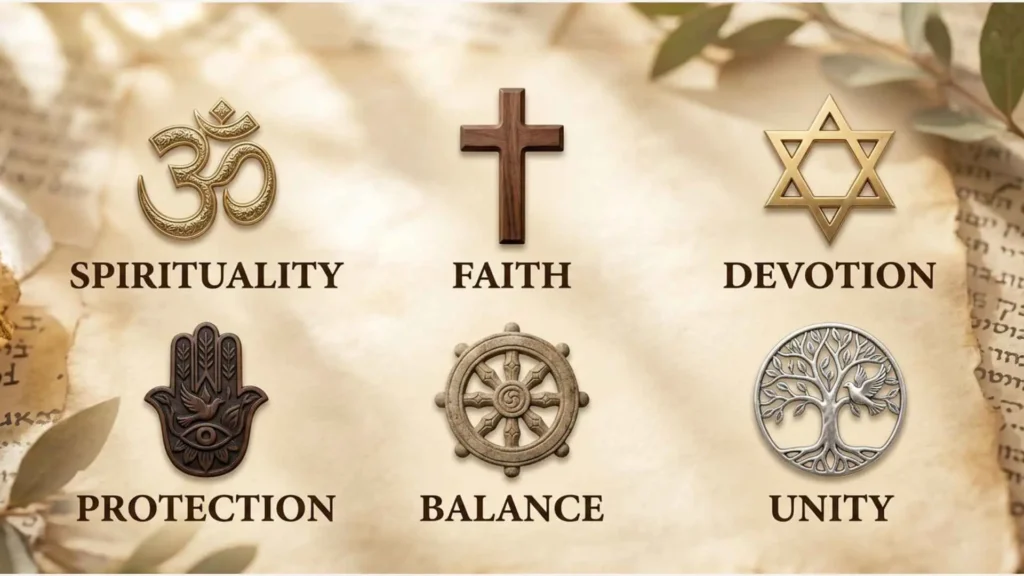
Christian symbolism often expresses perseverance through the cross, anchor, crown, and pilgrimage. The cross primarily represents the crucifixion of Jesus Christ, sacrifice, salvation, and faith. In personal interpretation, it may also symbolize endurance through suffering.
The anchor became an early Christian sign of hope and steadfast faith. Its shape and maritime meaning made it suitable for expressing stability during spiritual or social hardship.
Other spiritual interpretations
Mountains are sacred in many religions because they connect height, distance, divine presence, revelation, and pilgrimage. Climbing them can symbolize spiritual effort, although each tradition gives particular mountains distinct meanings.
Fire also represents purification and transformation in several religions. When connected with the phoenix, it may suggest that painful change can lead to renewal.
Scientific and Technical Meaning
Perseverance does not have a universal scientific symbol. In research, engineering, and medicine, persistence is usually described through words, measurements, or process diagrams rather than one standardized icon.
However, several technical concepts resemble symbolic perseverance:
- Iteration represents repeated attempts to improve a result.
- Feedback loops show how systems adjust through continuous response.
- Infinity symbols can suggest endless continuation, although infinity is a mathematical concept rather than a formal sign of perseverance.
- Progress bars visually represent incomplete but continuing work.
- Upward graphs may suggest improvement, but they can oversimplify progress because real development is rarely perfectly linear.
- Mars rover Perseverance carries the virtue in its name, linking scientific exploration with sustained effort under extreme conditions.
These technical uses show how modern culture translates perseverance into processes: test, learn, adjust, and continue.
Where Are Perseverance Symbols Used?
Tattoos
Tattoos often combine symbols with dates, names, quotations, or scars. Common choices include lotus flowers, phoenixes, arrows, mountains, koi fish, semicolons, anchors, trees, and waves.
The semicolon is especially associated with mental health awareness and continuing one’s story. It should not be treated as a generic decorative sign when used in that context.
Jewelry
Anchors, knots, trees, lotus flowers, and infinity signs appear in necklaces, bracelets, rings, and charms. Jewelry allows a symbol to remain private while still serving as a daily reminder.
Literature and storytelling
Writers use long roads, storms, mountains, fire, winter, and returning spring as metaphors for endurance. A character’s damaged but repaired object may also symbolize survival.
Art and architecture
Public memorials often use durable materials, rising forms, eternal flames, or rebuilding imagery. These designs can represent collective perseverance after war, disaster, oppression, or loss.
Logos and organizations
Schools, sports teams, charities, recovery programs, and outdoor companies frequently use mountains, trees, flames, shields, or animals to communicate determination.
Gifts and ceremonies
Perseverance symbols appear in graduation cards, recovery gifts, retirement keepsakes, memorial items, and awards. The best symbol depends on the recipient’s experience. A turtle may suit a long academic journey, while a phoenix may better represent rebuilding after a major loss.
Common Variations and Modern Adaptations
Lotus variations
An open lotus often suggests awakening or achievement. A partially closed bud may symbolize potential and continuing development. Color meanings vary by religious tradition and modern design practice.
Phoenix variations
A phoenix rising from flames emphasizes rebirth. A phoenix with spread wings may suggest freedom, power, or a triumphant return. Modern designs sometimes resemble eagles or other firebirds, which can blur cultural distinctions.
Mountain variations
A single peak may represent one defining challenge. A mountain range can symbolize a lifetime of continuing obstacles. A path leading upward emphasizes the journey rather than the destination.
Arrow designs
An arrow must be drawn backward before moving forward, so it has become a popular modern metaphor for temporary setbacks. Historically, arrows have many other meanings, including hunting, warfare, direction, and protection.
Broken and repaired objects
Repair imagery, especially visible cracks filled or highlighted rather than hidden, can symbolize survival and transformation. Japanese kintsugi is often cited in this context. Traditionally, it is a method of repairing ceramics with lacquer and metallic powder, not simply a universal metaphor for emotional healing.
Infinity and knot patterns
The infinity sign suggests endlessness in modern popular culture. Knots can represent continuity, commitment, interconnection, or an unbroken path. These signs may look similar while coming from very different histories.
Common Misconceptions About Perseverance Symbols
There is one universal symbol of perseverance
No single image has represented perseverance in every culture and historical period. The lotus, phoenix, mountain, and oak are all strong examples, but their meanings vary.
Every traditional symbol has one fixed meaning
Symbols are usually layered. A lotus may represent spiritual awakening, divine beauty, purity, creation, or detachment. Perseverance is only one possible interpretation.
The phoenix originated as a modern recovery symbol
The phoenix has ancient literary roots. Its modern association with trauma recovery and personal reinvention developed through later interpretation.
Perseverance always means refusing to quit
Healthy perseverance includes evaluation and adaptation. Leaving a harmful path can require more courage than continuing it.
Any Indigenous-style image is appropriate to use
Sacred or culturally specific imagery should not be copied without understanding its source. Respectful use begins with accurate attribution and awareness of cultural significance.
The infinity sign traditionally means perseverance
In mathematics, the infinity sign represents an unbounded concept. Its use for everlasting love, limitless strength, or perseverance is largely a modern symbolic adaptation.
10 Interesting Facts About Perseverance Symbols
- Slow animals often carry strong symbolic meanings. Turtles and snails may seem weak compared with lions or eagles, yet they represent patience, consistency, and the value of continuing at one’s own pace.
- Flexibility is a recurring theme. Bamboo, reeds, rivers, and waves survive by adapting. These symbols challenge the idea that perseverance must always be rigid.
- Many perseverance symbols begin in difficult environments. Lotus flowers rise from mud, mountains require steep climbs, and salmon travel against strong currents. The obstacle is part of the symbolism.
- The phoenix has no single standardized appearance. Artists have represented it in many forms, often combining features of eagles, peacocks, or other majestic birds.
- An anchor represents controlled stillness. Unlike a ship’s sail, which suggests movement, an anchor expresses perseverance through stability during dangerous conditions.
- Repair can be more meaningful than perfection. Images of mended pottery or stitched fabric recognize damage rather than pretending it never occurred.
- The ant represents collective perseverance. Its symbolism often includes cooperation and preparation, reminding people that endurance does not have to be solitary.
- Mountains symbolize both obstacles and sacred places. Their meaning depends on perspective: a mountain can block a path, provide a destination, or bring a person closer to the divine.
- Trees combine patience with visible growth. Their rings record years of development, making them natural symbols of progress that cannot be rushed.
- Modern symbols often merge traditions. A tattoo may combine a Buddhist lotus, an infinity sign, and an English quotation. Such designs can be meaningful, but they do not necessarily preserve each symbol’s original cultural meaning.
Related Symbols and Their Meanings
Resilience symbols
Resilience symbols emphasize recovery after pressure or damage. The phoenix, bamboo, and repaired pottery fit this category. Perseverance focuses more directly on continuing effort over time.
Strength symbols
Lions, bears, shields, hammers, and oak trees represent power or protection. Strength can support perseverance, but the two ideas are not identical.
Hope symbols
Sunrise, stars, rainbows, candles, and birds often symbolize hope. Hope looks toward a better future, while perseverance describes the effort needed to reach it.
Transformation symbols
Butterflies, snakes shedding skin, fire, and phoenixes represent major change. Transformation may result from perseverance, but it can also happen suddenly or naturally.
Patience symbols
Turtles, snails, seeds, hourglasses, and growing trees represent waiting and gradual development. Patience becomes perseverance when it remains connected to purposeful action.
Courage symbols
Lions, swords, shields, and flames often represent courage. Courage helps a person face difficulty, while perseverance helps that person continue facing it.
Frequently Asked Questions
What is the most widely recognized symbol of perseverance?
The lotus flower is one of the most widely recognized perseverance symbols because it grows through muddy water before blooming above the surface. The phoenix, mountain, oak tree, and turtle are also common choices. No symbol is universal, so the best option depends on the culture, context, and type of struggle being represented.
What animal symbolizes perseverance?
The turtle commonly symbolizes patient perseverance and steady progress. Ants represent persistent labor and cooperation, while salmon symbolize determination because they travel against currents during migration. Koi fish are also linked with ambition and overcoming obstacles, especially through Chinese legends and later Japanese visual culture.
What flower represents perseverance?
The lotus is strongly associated with perseverance because it rises from muddy conditions and blooms above the water. Dandelions also carry a modern association with survival because they grow in difficult places. In some contexts, gladiolus flowers represent strength of character, while sunflowers can suggest loyalty and continued movement toward light.
What tree symbolizes perseverance?
The oak tree is a classic symbol of perseverance, endurance, and lasting strength. Its slow growth, strong wood, broad roots, and long lifespan contribute to this interpretation. Bamboo also symbolizes perseverance, but it communicates a different lesson: flexibility and adaptation can be more effective than resisting every force directly.
What tattoo symbolizes never giving up?
Common “never give up” tattoos include mountains, arrows, phoenixes, lotus flowers, koi fish, anchors, and semicolons. Each has a distinct meaning. A mountain highlights the challenge, an arrow suggests forward motion after being pulled back, and a phoenix represents rebuilding after severe loss or destruction.
Is the infinity sign a perseverance symbol?
The infinity sign can represent endless determination in modern jewelry, tattoos, and motivational designs. However, perseverance is not its original or formal mathematical meaning. In mathematics, it refers to an idea without a finite limit. Its emotional meanings come from contemporary cultural interpretation.
What color represents perseverance?
There is no universally accepted color of perseverance. Red may suggest courage and energy, blue can represent stability, green often indicates growth, and gold may symbolize achievement. Color meanings vary across cultures, religions, and design systems, so a symbol’s form and context usually communicate perseverance more clearly than color alone.
What symbol represents overcoming hard times?
The phoenix is one of the clearest symbols of overcoming hard times because it represents renewal after destruction. A lotus represents rising above difficult conditions, while repaired pottery symbolizes healing that does not hide past damage. Mountains and storms can also represent the challenge itself and the effort required to survive it.
Can a symbol represent both perseverance and change?
Yes. The phoenix, lotus, butterfly, river, and repaired vessel can all represent perseverance and transformation. They show that continuing does not always mean staying the same. In many cases, lasting through hardship changes a person’s identity, priorities, or direction.
How do I choose a personal perseverance symbol?
Choose a symbol that matches the way you experienced difficulty. A turtle suits slow progress, bamboo reflects flexibility, a mountain represents a demanding goal, and a phoenix expresses renewal after major loss. Consider cultural origins, religious significance, and personal relevance before using the image in a tattoo, gift, or permanent design.
Key Takeaways
- Perseverance symbols represent sustained effort during hardship, delay, or uncertainty.
- Common examples include the lotus, phoenix, mountain, oak tree, turtle, bamboo, anchor, and endless knot.
- No single symbol has the same meaning in every culture.
- Natural symbols often reflect growth, adaptation, survival, and seasonal renewal.
- Religious symbols usually carry meanings broader than personal motivation.
- The phoenix emphasizes renewal, while the turtle represents steady progress.
- Bamboo shows that perseverance may require flexibility rather than rigidity.
- Context matters when using sacred or culturally specific imagery.
- Healthy perseverance includes knowing when to adapt, pause, or change direction.
- A personal symbol becomes powerful through the memories, values, and actions connected to it.
Conclusion
Perseverance symbols give visible form to an experience that is often difficult to explain. They remind us that endurance can look like climbing, rebuilding, bending, waiting, healing, or simply taking one more step.
The lotus rises through mud, the phoenix returns after destruction, bamboo bends beneath pressure, and the turtle continues without rushing. Each image presents a different lesson, but all point toward the same truth: meaningful progress often requires time, adaptation, and repeated effort.
The most powerful perseverance symbol is not necessarily the oldest or most famous. It is the one that honestly reflects the struggle, values, and hope of the person using it.

I am Amelia Carter, an English language educator and educational writer who enjoys making difficult ideas simple and easy to understand. At LearnNestly, I write about English words, grammar, everyday expressions, and language questions that people often find confusing. I believe learning should feel practical, clear, and enjoyable rather than overwhelming. Through my writing, I try to give readers explanations they can understand and use in real life.
Books:
- The Everyday English Handbook
- Words Made Simple
 Ethan Mitchell