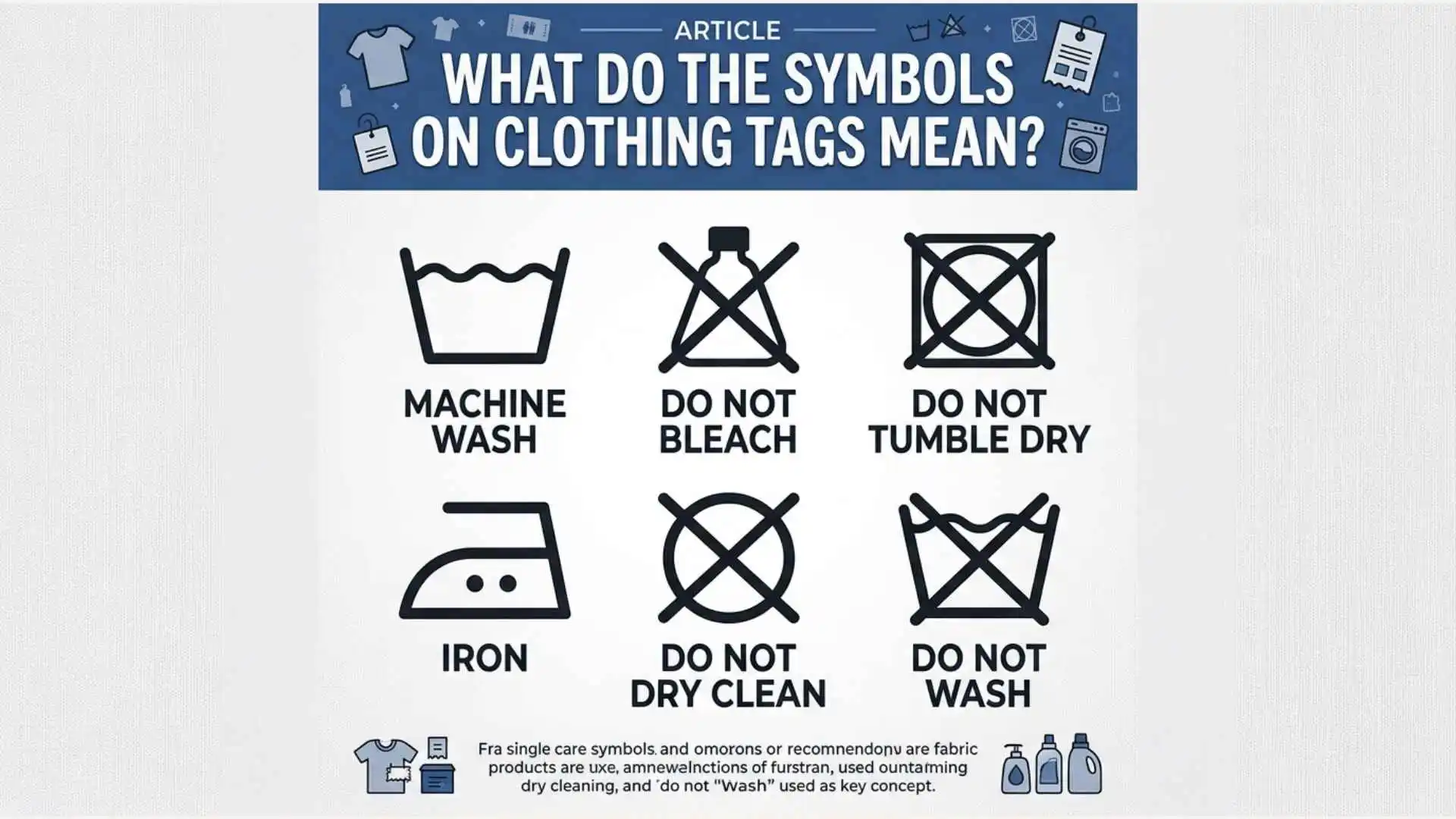
Those tiny symbols on clothing tags can look confusing, but they provide important instructions for washing, drying, ironing, bleaching, and caring for your clothes. A bucket, triangle, square, or iron symbol may tell you exactly how to clean a garment without damaging its fabric, color, or shape.
Understanding clothing tag symbols can help you avoid common laundry mistakes, such as shrinking a sweater, fading dark clothes, or damaging delicate fabrics with too much heat. Each symbol represents a specific care instruction, and some symbols also include dots, lines, or crosses that change what you should or should not do.
In this complete guide, you’ll learn what the symbols on clothing tags mean, how to read common laundry care symbols, and what each washing, drying, bleaching, ironing, and dry-cleaning symbol tells you. Once you know the basics, those confusing tags become a simple guide for keeping your favorite clothes looking and feeling their best.
Quick Meaning
Clothing tag symbols provide the safest care instructions for a textile product. A wash tub covers washing, a triangle represents bleaching, a square indicates drying, an iron explains ironing limits, and a circle gives professional-cleaning instructions. Crosses prohibit a treatment, dots show heat levels, and bars indicate gentle cycles.
Clothing Care Symbols Overview
| Symbol or Shape | Primary Meaning | Common Variations | What the Variations Show |
| Wash tub | Washing instructions | Numbers, dots, hand, bars, cross | Temperature and wash cycle |
| Triangle | Bleaching instructions | Empty, striped, crossed out | Type of bleach allowed |
| Square | Drying instructions | Circle, lines, dots, cross | Tumble or natural drying |
| Iron | Ironing instructions | One to three dots, cross | Maximum iron temperature |
| Circle | Professional textile care | Letters, bars, cross | Dry-cleaning or wet-cleaning method |
| Cross over any symbol | Treatment prohibited | Large X | Do not use that process |
| One or two bars underneath | Gentler treatment | One bar or two bars | Mild or very mild process |
| Dots inside a symbol | Heat setting | One, two, or three dots | Low, medium, or high heat |
International care-label systems normally arrange the symbols in this order: washing, bleaching, drying, ironing, and professional textile care. The symbols communicate the most severe treatment that should not cause irreversible damage to the textile when used correctly.
What Do the Symbols on Clothing Tags Mean?
Clothing tag symbols describe the maximum safe treatment for a garment. They do not always tell you the only possible way to care for it.
For example, a label that allows machine washing at 40°C may also be safely washed at 30°C. Similarly, an item approved for high-temperature ironing can usually be ironed at a lower setting. However, exceeding the stated limit can damage the fibers, dye, shape, coating, or decorative details.
The main rules are simple:
- A crossed-out symbol means the treatment is prohibited.
- More dots usually mean more heat is allowed.
- A line beneath a symbol means use a gentler process.
- Two lines beneath it mean use a very gentle process.
- A number inside the wash tub shows the maximum wash temperature in Celsius.
- A hand inside the tub means hand wash.
- An empty basic symbol usually allows the standard version of that treatment.
These instructions apply to the complete garment, not merely its main fabric. A cotton shirt with delicate embroidery, elastic, printed graphics, or special coatings may require gentler care than plain cotton.
Washing Symbols and Their Meanings
The wash tub is the first major laundry-care symbol. It tells you whether the garment can be washed with water and which temperature or cycle is safe.
Machine Wash
A plain wash tub means the item can usually be washed in a washing machine using a normal cycle.
Some labels include a temperature such as:
| Temperature | Approximate Fahrenheit Equivalent | Common Use |
| 20°C | 68°F | Very cold, delicate items |
| 30°C | 86°F | Colors and lightly soiled clothes |
| 40°C | 104°F | Everyday washable clothing |
| 50°C | 122°F | More durable fabrics |
| 60°C | 140°F | Towels, bedding, and hygienic washing |
| 70°C | 158°F | Heat-tolerant textiles |
| 95°C | 203°F | Very durable white cotton or linen |
The number represents the maximum, not the required temperature. Washing at a lower temperature may reduce energy use and help preserve colors, provided the garment becomes adequately clean.
Wash-Tub Dots
Some North American labels use dots instead of Celsius numbers:
- One dot: cold wash
- Two dots: warm wash
- Three dots: hot wash
Because exact temperature ranges may vary by labeling system, the washing machine’s cold, warm, or hot setting should follow the appliance manufacturer’s guidance.
Permanent-Press or Mild Cycle
A wash tub with one line underneath means the garment needs a mild process, often called permanent press, easy care, or synthetic cycle.
This cycle generally uses:
- Reduced mechanical action
- A shorter agitation period
- A slower final spin
- Gentler handling to limit creasing
It is common on synthetic fabrics, blended garments, and wrinkle-resistant clothing.
Delicate or Very Mild Cycle
A wash tub with two lines underneath means use a very gentle cycle.
This instruction often appears on:
- Delicate underwear
- Fine knitwear
- Lightweight synthetic fabrics
- Sheer textiles
- Garments vulnerable to stretching
A laundry bag may provide extra protection, but it does not replace the correct cycle.
Hand Wash
A hand placed inside the wash tub means hand wash only.
Use cool or lukewarm water and mild detergent. Gently move the garment through the water rather than twisting, scrubbing, or aggressively wringing it. Support wet knitwear with both hands because water adds weight and may stretch the fibers.
Some newer washing machines have a hand-wash setting, but it should only be used when the machine manufacturer says the cycle is suitable for hand-wash garments.
Do Not Wash
A crossed-out wash tub means do not wash with water.
The item may require professional dry cleaning, specialized spot cleaning, or another method stated on the label. Washing it could cause:
- Severe shrinkage
- Dye bleeding
- Loss of shape
- Separation of bonded layers
- Damage to leather trim
- Ruined surface finishes
Bleaching Symbols and Their Meanings
A triangle represents bleaching. Bleach instructions matter because different products affect fibers and dyes differently.
Any Bleach Allowed
An empty triangle means any suitable bleach may be used when needed.
This can include chlorine bleach or non-chlorine oxygen bleach, although you should still follow the bleach manufacturer’s directions and confirm that the garment’s color is stable.
Non-Chlorine Bleach Only
A triangle containing two diagonal lines means use only non-chlorine bleach.
Choose an oxygen-based or color-safe bleaching product. Do not use sodium hypochlorite chlorine bleach because it may fade the color, weaken fibers, or discolor the fabric.
Do Not Bleach
A crossed-out triangle means no bleaching product should be used.
This restriction may include chlorine bleach and oxygen bleach. Check stain-removal products carefully because some contain bleaching ingredients even when “bleach” is not prominent on the front label.
A common mistake is assuming bleach is only used on white garments. Bleaching symbols may also appear on colored clothes, towels, sportswear, and household textiles.
Drying Symbols and Their Meanings
A square represents drying. The details inside the square explain whether the garment can enter a tumble dryer or needs natural drying.
Tumble-Drying Symbols
A circle inside a square represents tumble drying.
Tumble Dry Allowed
A circle inside a square without other markings means tumble drying is allowed using a normal process.
Tumble Dry on Low Heat
One dot inside the tumble-dry symbol means use low heat.
Low heat is commonly recommended for:
- Synthetic fabrics
- Stretch clothing
- Performance wear
- Lightweight garments
- Items with printed designs
Excessive heat can damage elastic fibers, shrink fabric, crack prints, or weaken adhesives.
Tumble Dry on Medium Heat
Two dots mean tumble dry at medium or normal heat.
This setting suits many everyday garments, but the label should always take priority over assumptions based on fabric type.
Tumble Dry on High Heat
Three dots mean high-temperature tumble drying is allowed.
This instruction is more likely on durable textiles, although high heat can still increase wear and energy use. Remove items promptly to reduce wrinkles.
No Heat or Air Dry
A solid or filled circle inside the square may indicate tumble drying without heat, depending on the symbol system used.
Choose an air-only or no-heat cycle. This process moves air through the dryer without applying normal drying heat.
Do Not Tumble Dry
A crossed-out circle inside a square means do not tumble dry.
The item may need to be hung, laid flat, or drip-dried. Putting it in a dryer could cause shrinkage, warping, melting, delamination, or elastic damage.
Natural-Drying Symbols
Lines inside a square describe natural drying methods.
Line Dry
A vertical line inside a square means line dry. Hang the garment from a clothesline or drying rack.
Two or three vertical lines may communicate drip drying in some care systems, meaning the item should be hung while wet with limited spinning or wringing.
Dry Flat
A horizontal line inside a square means dry the garment flat.
This method is especially important for sweaters and knitted fabrics. Hanging wet knitwear can stretch the shoulders and body because the weight of the water pulls the material downward.
Place the garment on a clean towel or mesh drying rack and reshape it to its original dimensions.
Dry in the Shade
Diagonal lines in a corner of the square mean dry in the shade.
Direct sunlight can fade dyes, yellow light-colored textiles, or affect certain fibers and finishes. Place the item in a ventilated area away from strong sunlight.
Combination Symbols
A square may combine drying instructions. For example:
- A horizontal line plus diagonal corner lines means dry flat in the shade.
- Vertical lines plus shade lines mean line or drip dry in the shade.
Read every marking inside the square before choosing a drying method.
Ironing Symbols and Their Meanings
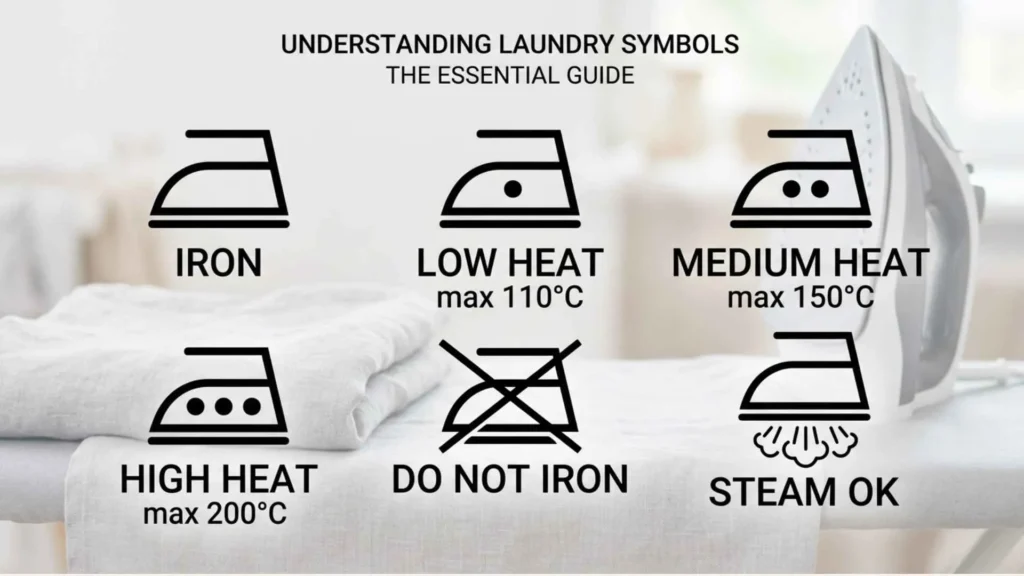
An iron-shaped symbol tells you whether the garment can be ironed and how much heat it can tolerate.
One Dot: Low Heat
One dot means use a low iron temperature, generally suitable for heat-sensitive materials.
Common examples include:
- Acetate
- Acrylic
- Nylon
- Some delicate synthetics
Avoid prolonged contact with the fabric. A pressing cloth can provide additional protection.
Two Dots: Medium Heat
Two dots mean use medium heat.
This level is commonly associated with:
- Polyester
- Wool
- Silk
- Fabric blends
The exact safe setting depends on the complete garment. Ironing a print, coating, or decorative surface directly may still cause damage.
Three Dots: High Heat
Three dots mean high heat is permitted.
Durable cotton and linen often tolerate higher temperatures, especially when slightly damp. Nevertheless, do not exceed the maximum setting recommended by the label.
Do Not Steam
An iron symbol with crossed-out steam lines means the garment can be ironed, but steam should not be used.
Steam can leave water marks, distort finishes, or damage certain heat-sensitive materials.
Do Not Iron
A crossed-out iron means do not iron.
Direct heat could melt fibers, flatten texture, discolor the material, damage a waterproof coating, or ruin printed decoration. Wrinkles may need to be released through careful hanging or another manufacturer-approved method.
Professional-Cleaning Symbols
A circle by itself represents professional textile care. Unlike the circle inside a square, which means tumble drying, a standalone circle gives instructions to a trained cleaner.
Dry-Cleaning Letters
Letters inside the circle tell the professional cleaner which solvents and processes are acceptable.
Common examples include:
- P: Professional dry cleaning using specified solvents, excluding certain highly restricted types
- F: Professional dry cleaning using hydrocarbon solvents under defined conditions
- A: Historically indicated that various dry-cleaning solvents could be used, although this mark is less common in modern international systems
- W: Professional wet cleaning
Consumers do not normally need to select the solvent themselves. The letter is technical guidance for the cleaner.
Gentle Professional Cleaning
One bar underneath the circle means a mild professional-cleaning process.
Two bars mean a very mild process with tighter restrictions on mechanical action, moisture, temperature, or drying.
Do Not Dry Clean
A crossed-out circle means do not dry clean.
Dry-cleaning solvents or professional processing could damage the garment’s coating, print, trim, adhesive, or construction.
Professional Wet Cleaning
A circle containing “W” means professional wet cleaning is allowed.
Professional wet cleaning is not the same as ordinary home washing. It uses controlled equipment, specialized detergents, carefully managed mechanical action, and professional finishing methods.
History and Origin of Clothing Care Symbols
Modern clothing-care symbols were developed to make textile instructions understandable across languages. Before standardized pictograms became common, labels relied heavily on written directions. This created problems for international clothing sales because manufacturers needed different wording for different countries.
GINETEX, the International Association for Textile Care Labelling, developed and manages a widely used symbol system. The International Organization for Standardization later established international standards for textile care labeling. The current ISO 3758:2023 standard defines graphic symbols for the most severe treatments that will not cause irreversible damage during textile care.
In the United States, the Federal Trade Commission’s Care Labeling Rule has required manufacturers and importers to provide regular care instructions for covered garments and certain textile goods since 1971. The FTC began allowing a specified ASTM symbol system to replace written care terms in 1997 under defined conditions.
The history of these marks is therefore practical rather than religious or ceremonial. They were created to reduce language barriers, support international trade, guide professional cleaners, and help consumers avoid damaging textile products.
Why Clothing Symbols Can Differ by Country
The basic shapes are widely recognizable, but not every market uses precisely the same details.
International labels commonly use Celsius temperatures inside the wash tub. North American labels may use dots or words such as cold, warm, and hot. Drying symbols also show regional differences because tumble dryers are more common in some countries, while natural-drying instructions appear more often in others.
The United States recognizes an ASTM-based care-symbol system under the FTC Care Labeling Rule. International garments often follow ISO and GINETEX conventions. A brand selling worldwide may include both symbols and written instructions to reduce confusion.
These systems share the same basic purpose, but consumers should read the whole label rather than interpreting one mark in isolation.
Scientific and Technical Meaning of Care Symbols
Laundry symbols are a form of technical risk communication. Each mark describes a controlled treatment involving one or more physical or chemical factors.
These factors include:
- Water temperature
- Mechanical agitation
- Solvent exposure
- Oxidizing bleach
- Drying temperature
- Moisture
- Steam
- Pressure
- Time
- Textile tension
Different fibers respond differently to these forces. Wool can shrink or felt through heat and agitation. Cotton may shrink at high temperatures. Elastane can lose stretch after repeated heat exposure. Some dyes bleed in water, while adhesives and coatings can separate during dry cleaning.
The symbols simplify these technical limits into a visual instruction system. They usually reflect the complete item’s weakest component. Therefore, a garment made mostly from a washable fiber may still carry restrictive instructions because of its lining, trim, buttons, embroidery, structure, or finish.
Where Clothing Tag Symbols Are Used
Laundry-care symbols appear on many textile products, including:
- Shirts, pants, dresses, and coats
- Underwear and sleepwear
- Sports clothing and swimwear
- Towels and washcloths
- Sheets, blankets, and pillowcases
- Curtains and removable furniture covers
- Fabric accessories
- Uniforms and workwear
- Children’s clothing
- Reusable textile products
The care label is usually sewn into a side seam, waistband, neckline, or inner lining. Some products place the instructions on a printed tag, removable label, packaging, or accompanying leaflet.
Care tags may also contain fiber percentages, country of origin, manufacturer identification, size information, and safety warnings. These details are separate from the laundry symbols but can help explain why a particular treatment is recommended.
Common Variations and Similar Symbols
Several care marks look similar but have different meanings.
Circle Versus Circle Inside a Square
A standalone circle concerns professional cleaning.
A circle inside a square concerns tumble drying.
Confusing these two symbols can lead to serious care mistakes.
Dots Versus Lines
Dots communicate heat level.
Lines beneath a symbol communicate process gentleness.
Lines inside a drying square describe the position or method used for natural drying.
Numbers Versus Dots in a Wash Tub
Numbers show maximum washing temperatures in Celsius.
Dots provide broader cold, warm, or hot categories in systems that use them.
Cross Versus Bar
A cross prohibits the treatment completely.
A bar does not prohibit it. It means the treatment is allowed only with reduced mechanical action or a gentler process.
Common Misconceptions About Clothing Tags
“The Label Shows the Best Possible Method”
The label usually shows a safe maximum treatment, not necessarily the most environmentally friendly or fabric-preserving option. A lower temperature or gentler process may also work.
“One Dot Means One Minute”
Dots represent heat levels, not time. This applies to washing, tumble drying, and ironing symbols that use dots.
“Dry Clean Only Means the Garment Cannot Get Wet”
Not always. It means the manufacturer has identified professional dry cleaning as the care method. Certain garments may tolerate specialized professional wet cleaning, but you should not experiment unless the label or manufacturer permits it.
“Hand Wash Means Scrub It by Hand”
Hand washing should be gentle. Scrubbing, twisting, or wringing can damage delicate fibers more than a carefully controlled machine cycle.
“Do Not Tumble Dry Means Do Not Dry”
It only prohibits tumble drying. The garment may still be line dried, drip dried, or laid flat according to other marks.
“Fabric Type Alone Determines Care”
Construction matters too. A cotton garment with interfacing, embellishments, elastic, or a printed finish may require different care from plain cotton fabric.
Interesting Facts About Laundry Care Symbols
- The five basic shapes form a visual language. A tub, triangle, square, iron, and circle communicate the main stages of textile care without requiring a written translation.
- The order of the symbols matters. International labels generally present washing, bleaching, drying, ironing, and professional care in a consistent sequence.
- The symbols communicate maximum safe treatment. A 40°C wash symbol does not mean the garment must be washed at exactly 40°C. It means you should not exceed that limit.
- The weakest component can control the whole label. A durable outer fabric may receive delicate instructions because the garment includes fragile trim, lining, elastic, or adhesive.
- A line can completely change a symbol’s meaning. The basic process remains permitted, but one or two bars require reduced mechanical action.
- Professional wet cleaning is not home washing. Both use water, but professional wet cleaning involves specialized equipment, detergents, control systems, and finishing techniques.
- Consumer recognition is uneven. GINETEX research found that washing and ironing marks were understood more widely than bleaching, drying, and professional-cleaning symbols among surveyed European consumers.
- Symbols help international commerce. Manufacturers can use a consistent visual system across countries instead of relying entirely on translated instructions.
- Lower treatment levels are often acceptable. Using less heat or a milder process usually remains within the maximum limit, although cleaning effectiveness must still be considered.
- Care instructions can preserve more than appearance. Correct laundering may protect fit, elasticity, water resistance, flame-resistant finishes, printed surfaces, and structural components.
Related Symbols and Label Information
Fiber-Content Labels
Fiber labels identify materials such as cotton, wool, polyester, nylon, or elastane. They describe composition, while care symbols explain treatment.
Textile Certification Marks
Certification logos may indicate testing, environmental criteria, recycled content, or restrictions on certain substances. They are not laundry instructions unless the program specifically includes care guidance.
Size Symbols
Size letters and numbers describe fit. They do not provide washing or drying information.
Safety Warnings
Some textiles carry warnings related to flammability, drawstrings, protective performance, or children’s sleepwear. These warnings should not be confused with ordinary care marks.
Recycling Symbols
Recycling marks relate to packaging or material recovery. They do not explain how to clean the garment.
Frequently Asked Questions
What does a crossed-out symbol on a clothing tag mean?
A large cross over any care symbol means that treatment is prohibited. A crossed-out tub means do not wash, a crossed-out triangle means do not bleach, and a crossed-out dryer means do not tumble dry. Ignoring the cross may cause irreversible damage such as shrinkage, fading, melting, distortion, or separation of garment layers.
What do the dots on clothing tags mean?
Dots show temperature or heat intensity. One dot generally means low heat, two dots mean medium heat, and three dots mean high heat. They commonly appear inside tumble-drying and ironing symbols. Some washing systems also use dots for cold, warm, and hot water instead of printing temperatures in Celsius.
What do lines underneath laundry symbols mean?
One line beneath a washing or professional-cleaning symbol calls for a mild process. Two lines require a very mild process. The treatment is still allowed, but mechanical action, spinning, moisture, or other process conditions must be reduced. Do not confuse these bars with lines inside a drying square, which describe natural-drying methods.
What does a hand in a wash tub mean?
A hand inside the wash tub means the garment should be hand washed. Use cool or lukewarm water, mild detergent, and gentle movement. Avoid scrubbing, twisting, and hard wringing. After rinsing, support the wet garment carefully and follow the drying symbol, especially when handling knitwear that may stretch.
What does a triangle on a clothing label mean?
The triangle represents bleaching. An empty triangle permits suitable bleach, while a triangle with diagonal lines allows only non-chlorine bleach. A crossed-out triangle means do not bleach. Because stain removers may contain bleaching agents, check their ingredient and usage information before applying them to a restricted garment.
What does a circle on a clothing tag mean?
A standalone circle gives professional-cleaning instructions. Letters such as P, F, or W tell a trained cleaner which solvent or wet-cleaning process is permitted. A circle inside a square has a different meaning: it represents tumble drying. Always check whether the circle appears alone or inside another shape.
Can I wash clothes at a lower temperature than the tag shows?
Generally, yes. A printed temperature is normally the maximum safe washing temperature. Washing below that limit may save energy and protect color. However, a lower temperature may not remove heavy soil, allergens, grease, or microorganisms as effectively, so consider the garment’s use, detergent directions, and hygiene needs.
What does “do not tumble dry” mean?
A crossed-out tumble-dryer symbol means the garment must not be dried in a rotating heated dryer. It does not mean the garment cannot be dried at all. Look for additional instructions showing whether it should be line dried, drip dried, dried in the shade, or laid flat.
Are clothing care symbols the same worldwide?
The main shapes are broadly similar, especially in ISO- and GINETEX-based systems, but regional details can differ. International labels often use Celsius numbers, while North American labels may use dots or written temperature terms. Brands may combine symbols and words when selling garments in multiple markets.
Should I follow the fabric type or the care label?
Follow the care label. Fiber type offers useful general guidance, but the label considers the complete garment, including dyes, seams, coatings, prints, linings, elastic, buttons, and decorations. These components may make the item more sensitive than the main fiber would suggest.
Key Takeaways
- A wash tub means washing, a triangle means bleaching, and a square means drying.
- An iron shows safe ironing conditions.
- A standalone circle gives professional-cleaning instructions.
- A crossed-out symbol means the process is prohibited.
- Dots indicate heat levels.
- One bar means mild treatment; two bars mean very mild treatment.
- Numbers inside a wash tub show the maximum temperature in Celsius.
- A hand in the tub means hand wash.
- A circle inside a square means tumble drying, not dry cleaning.
- Read all symbols because care instructions apply to the complete garment.
Conclusion
Learning what do the symbols on clothing tags mean turns a confusing group of shapes into a practical garment-care guide. The five main symbols cover washing, bleaching, drying, ironing, and professional cleaning, while dots, lines, numbers, and crosses add precise limits.
Checking the tag before doing laundry can help preserve color, fit, texture, elasticity, decoration, and fabric strength. When a symbol remains unclear, choose the gentler treatment and consult the garment manufacturer or a qualified textile-care professional before proceeding.

I am Ethan Mitchell, an English writer and lifelong learner who is fascinated by words and the way language changes over time. At LearnNestly, I share practical explanations designed for readers who want to improve their understanding of English without complicated terminology. I enjoy researching meanings, usage, grammar, and common language mistakes, then presenting the information in a simple and useful format. My purpose is to make every article a small learning experience that readers can actually apply.
Books:
- The Smart Learner’s English Guide
- English in Real Life
 Amelia Carter